



 MENU
MENU
Wheelchair Seating Pressure Mapping System
REAL-TIME SEATING ASSESSMENT
Tactilus by Blue Chip Medical — Objective Interface Pressure Data for Seating Specialists
Blue Chip Medical supplies the Tactilus wheelchair seating pressure mapping system to hospitals, VA hospitals, rehabilitation facilities, seating clinics, and long-term care facilities across the United States.

 Tactilus Seating Pressure Mapping System
Blue Chip Medical’s Tactilus Wheelchair Seating Pressure Mapping System delivers real-time interface pressure data to help seating specialists select and validate therapeutic cushions, prevent pressure injuries, and document clinical decisions. Supplied to hospitals, VA facilities, and long-term care.
Tactilus Wheelchair Seating Pressure Mapping — At a Glance
CLINICIAN SUMMARY
A wheelchair seating pressure mapping system measures interface pressure between a patient’s body and a seating surface in real time. Seating specialists use pressure mapping data to identify high-risk pressure zones at the ischial tuberosities, sacrum, and coccyx; evaluate and compare wheelchair cushion performance; optimize postural positioning; and document clinical decision-making for DME justification and wound care programs.
The Tactilus seating system uses a 20″ x 20″ piezoresistive sensing pad with 1,024 discrete sensing points, a pressure range of 0–200 mmHg, and a Windows-based clinical interface with 2D and 3D visualization, quadrant monitoring, and side-by-side cushion comparison for up to three surfaces simultaneously. It transmits wirelessly and is manufactured in the USA.
What Wheelchair Seating Pressure Mapping Measures and Why It Matters Clinically
SEATING DATA. INJURY PREVENTION.
Pressure injuries in wheelchair users develop through the same mechanism as those in bedridden patients. Sustained interface pressure compresses soft tissue against underlying bone, restricting microcirculatory perfusion and initiating ischemic injury. In seated patients, the anatomy is more concentrated. The ischial tuberosities bear the primary load, typically generating the highest interface pressures in the body during seated positioning. The sacrum, coccyx, and greater trochanters carry secondary risk depending on postural alignment and pelvic position.
Capillary closing pressure is typically cited at 32 mmHg. Seated patients, particularly those with spinal cord injury, neurological conditions, or reduced sensation, may sustain pressures well above this threshold for hours without awareness. Standard seating assessment identifies patients at risk but does not quantify the interface pressure a specific patient generates on a specific cushion. Pressure mapping does.
A wheelchair seating pressure mapping system captures:
- Peak pressure at the ischial tuberosities and other high-risk seating zones
- Mean pressure across the full seating contact area
- Pressure distribution and load symmetry between left and right sides
- Quadrant-by-quadrant pressure analysis for asymmetric postural assessment
- Center of gravity positioning relative to the seating surface
- Real-time pressure response to postural adjustments and tilt-in-space changes
This data gives seating specialists an objective, reproducible basis for cushion selection, postural intervention, repositioning instruction, and payor documentation that clinical observation alone cannot provide.
Blue Chip Medical’s Tactilus Wheelchair Seating Pressure Mapping System
1,024 SENSING POINTS. SEATING PRECISION.
Blue Chip Medical supplies the Tactilus wheelchair seating pressure mapping system as part of a comprehensive clinical pressure assessment program serving hospitals, VA hospitals, rehabilitation facilities, skilled nursing facilities, seating clinics, and wound care programs across the United States.
The Tactilus seating system uses piezoresistive sensor technology across 1,024 discrete sensing points covering a 20″ x 20″ seating contact area. The pad profile, 0.098 inches thick, integrates into standard wheelchair seating assessments without altering the patient’s functional seating position. All data transmits wirelessly to the Windows-based clinical interface.
System Specifications
| Technology | Piezoresistive |
| Total Sensing Points | 1,024 |
| Map Size | 20″ x 20″ |
| Total Sensing Area | 18.3″ x 18.3″ |
| Pressure Range | 0–200 mmHg |
| Scan Speed | 10 sec per min |
| Pad Thickness | 0.098 in. (2.5 mm) |
| Transmission Mode | Wireless |
| Country of Manufacture | USA |
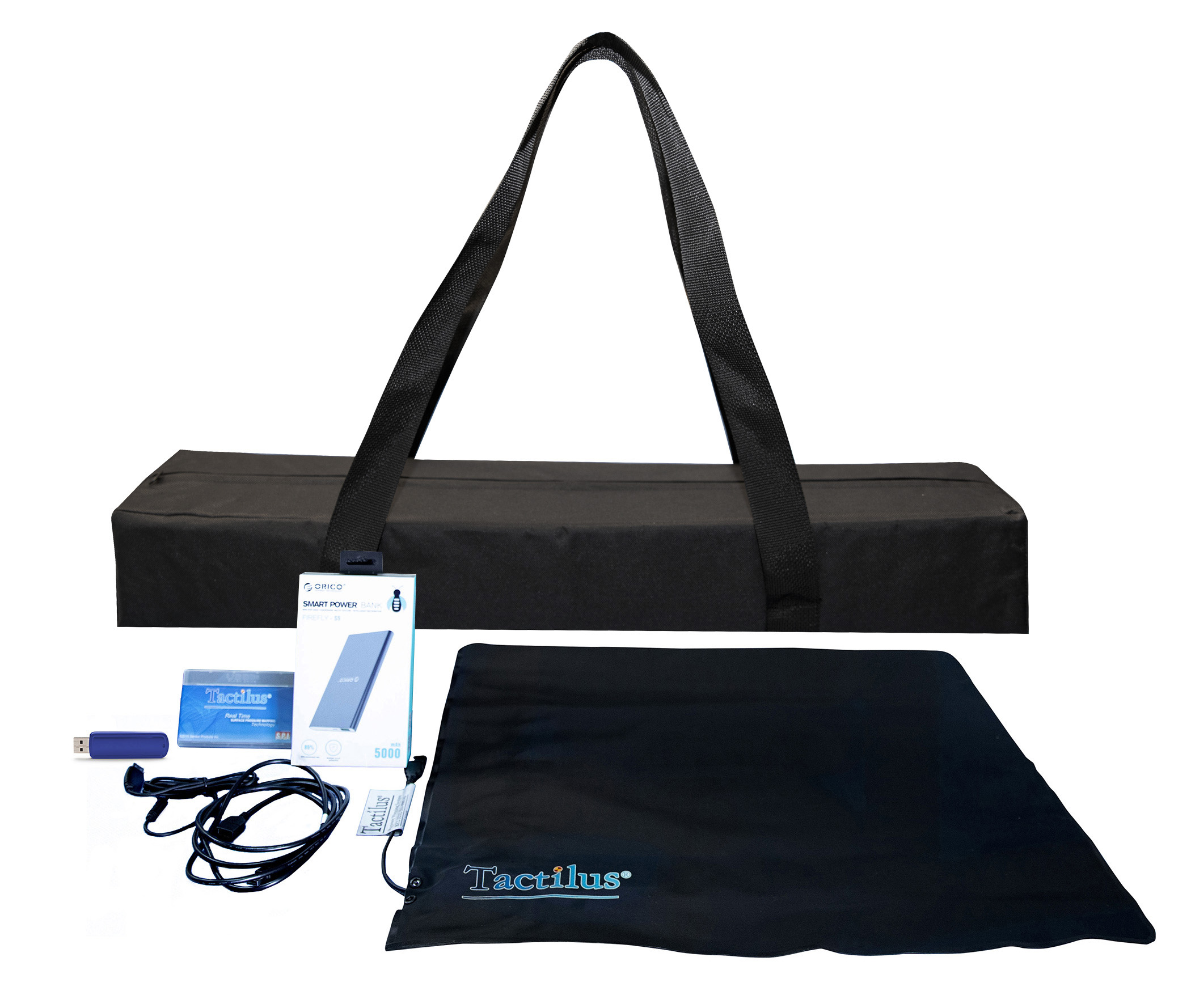
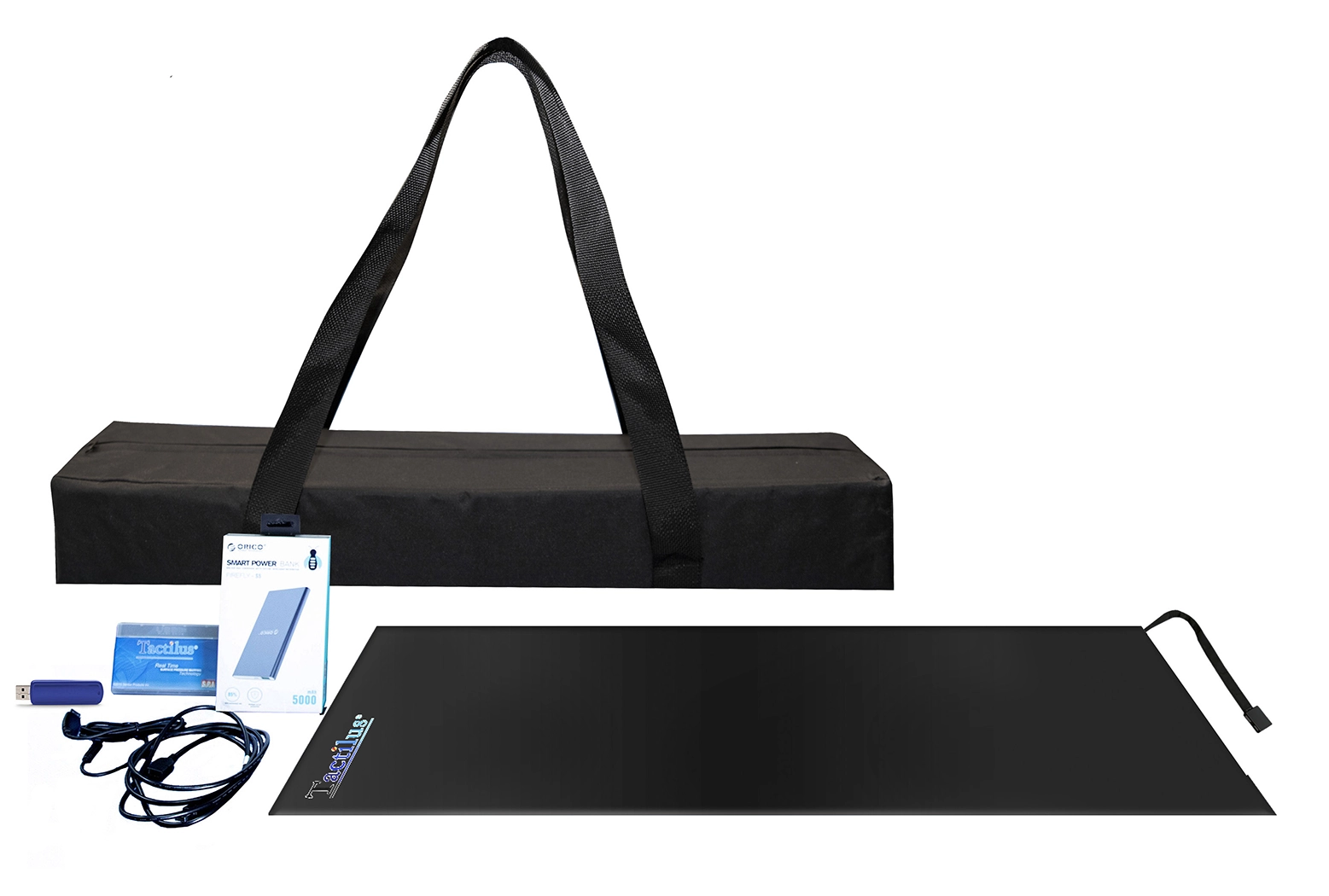
Kit Contents
- Sensing pad
- Battery pack
- Cables
- Memory stick
- Windows-based software
- Hard shell case with strap
Clinical Software Platform
DATA SEATING SPECIALISTS CAN ACT ON
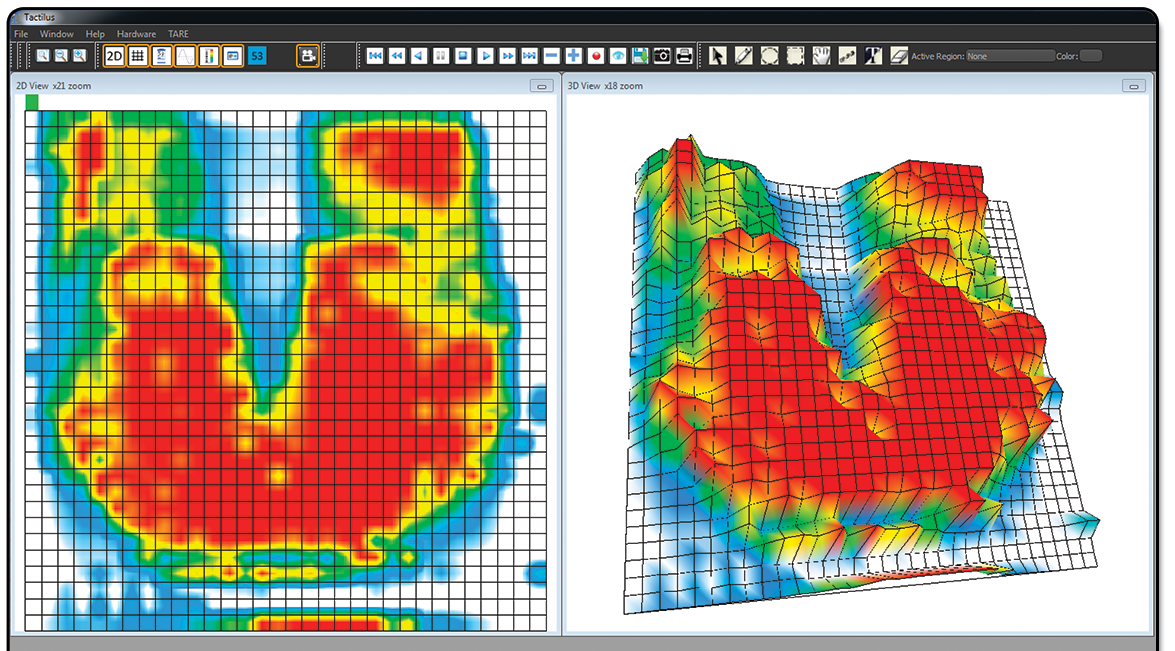
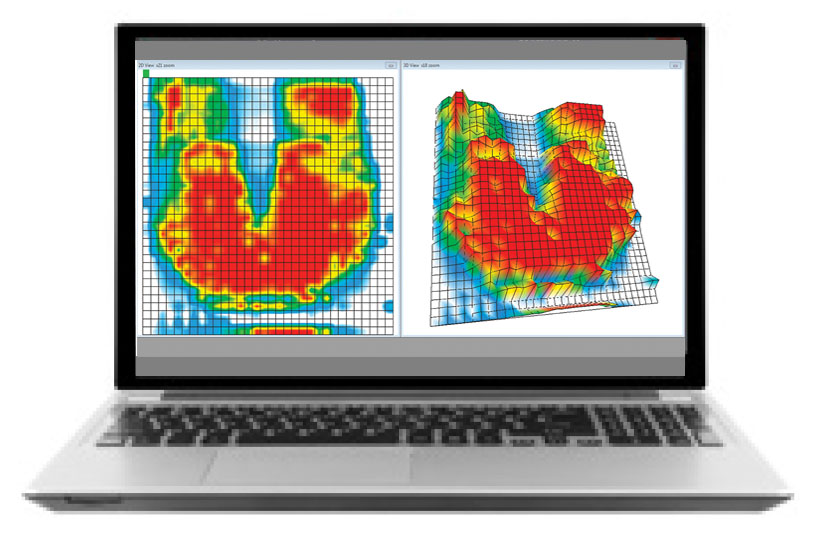
The Tactilus Windows-based interface is built for clinical seating assessment, not laboratory use. It displays seating pressure data in high-definition 2D and 3D formats, supports session recording, and generates exportable outputs compatible with DME documentation, wound care program records, and institutional reporting requirements. The interface is compatible with Windows laptops and tablets for flexible deployment in seating clinics, inpatient units, and rehabilitation settings.
Software Capabilities
- High-definition 2D and 3D pressure visualization
- Real-time session recording and playback
- Quadrant monitoring for left/right and anterior/posterior pressure analysis
- Center of gravity indicator
- Average pressure graphing over time
- Region of interest (ROI) masking for anatomical zone analysis
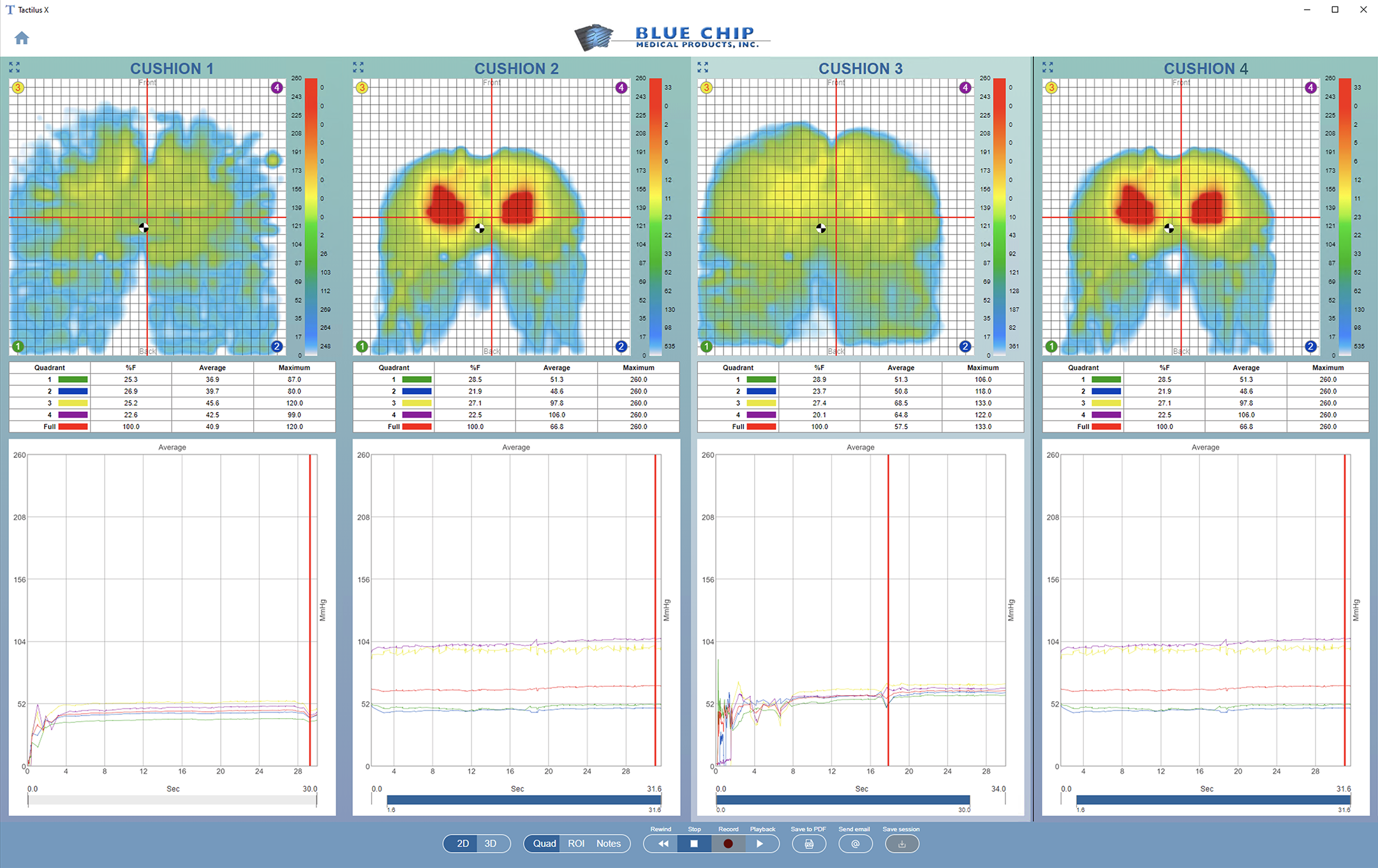
- Side-by-side cushion comparison for up to three cushions simultaneously
- Notes field for clinical documentation
- Video export (.AVI format)
- Data export to Excel
- PDF report generation and sharing
The quadrant monitoring function is clinically significant for wheelchair users. Asymmetric loading, where one ischial tuberosity bears disproportionately higher pressure than the other, indicates postural imbalance that increases localized tissue injury risk. Quadrant data gives seating specialists objective evidence to guide postural correction, cushion reconfiguration, or referral for further evaluation.
The three-cushion comparison function supports both clinical decision-making and payor justification. Mapping a patient on their current cushion and two therapeutic alternatives generates documented evidence that the recommended cushion produces the most clinically appropriate pressure distribution for that individual.
Who Uses Wheelchair Seating Pressure Mapping and How
BUILT FOR SEATING SPECIALISTS
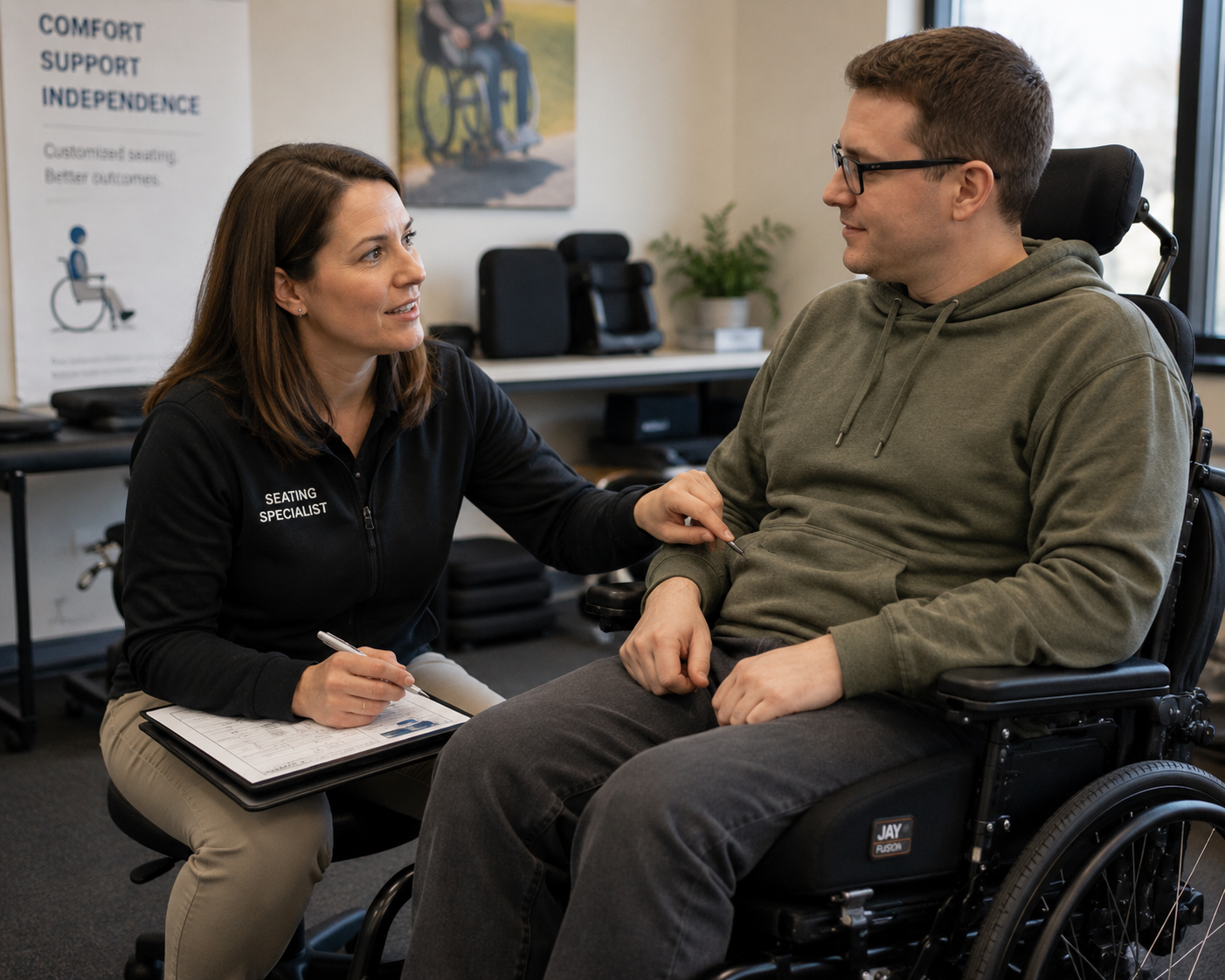
Wheelchair seating pressure mapping is a multidisciplinary clinical tool. The following roles integrate Tactilus seating data into patient care and facility operations.
Assistive Technology Professionals (ATPs) and Certified Rehabilitation Technology Suppliers (CRTs)
ATPs and CRTs use pressure mapping as a primary clinical assessment tool for wheelchair cushion selection and justification. Pressure mapping data provides the objective clinical evidence required to support Medicare and Medicaid documentation for pressure-relieving and pressure-redistributing cushion categories. Without objective pressure data, cushion recommendations rely on clinical judgment alone. Mapping makes that judgment documentable and defensible.
Physical and Occupational Therapists
PTs and OTs use seating pressure mapping as a functional assessment tool within wheelchair seating evaluations. Mapping data informs cushion selection, postural support decisions, and tilt-in-space or recline system recommendations. Real-time pressure visualization also functions as a biofeedback tool, showing patients and caregivers the immediate pressure effects of postural adjustments and reinforcing positioning education.
Wound Care Nurses and CWOCNs
Wound care clinicians use seating pressure mapping to assess interface pressure in patients with active sacral, ischial, or coccygeal pressure injuries. Mapping data identifies whether a patient’s current seating surface is contributing to wound chronicity and provides objective grounds for therapeutic cushion upgrade or modification.
Seating Clinic Programs
Dedicated seating clinic programs use the Tactilus system as a standard component of complex wheelchair evaluations. Pressure mapping data is integrated into the clinical record, shared with referring physicians for equipment orders, and used to support insurance authorization for therapeutic seating equipment.
Directors of Nursing and Clinical Program Managers
DONs and clinical directors in long-term care and rehabilitation settings use seating pressure mapping programs to support facility-wide pressure injury prevention initiatives, demonstrate clinical due diligence for CMS compliance, and document the clinical basis for therapeutic equipment procurement decisions.
Clinical Applications by Care Setting
FROM ACUTE REHAB TO LONG-TERM CARE
Hospitals and Acute Care
Patients transitioning from bed to wheelchair seating during acute hospitalization require seating assessment before discharge. An inappropriate seating surface at discharge creates immediate pressure injury risk, particularly for patients with new neurological deficits, post-surgical limitations, or reduced sensation. Pressure mapping at the bedside or in seating clinic identifies the appropriate cushion before the patient leaves the facility.
VA Hospitals
VA hospital patient populations include high concentrations of spinal cord injury, traumatic brain injury, lower extremity amputation, and other conditions associated with elevated seating pressure injury risk. Seating pressure mapping supports individualized cushion selection and provides the documented clinical evidence required for VA DME procurement processes. Blue Chip Medical supplies the Tactilus system directly to VA hospitals and federal healthcare facilities.
Rehabilitation Facilities
Inpatient and outpatient rehabilitation programs use seating pressure mapping as a standard component of wheelchair seating evaluations. Mapping data informs the initial equipment recommendation, supports insurance authorization, and provides a baseline for follow-up assessment as the patient’s functional status evolves.
Long-Term Care and Skilled Nursing Facilities
Residents in long-term care settings who use wheelchairs for primary mobility require ongoing seating pressure assessment. Mapping identifies residents whose current cushion is clinically insufficient, supports decisions to upgrade therapeutic seating equipment, and generates the documentation facilities need for wound care program compliance and survey readiness.
Home Health and Home Care
Home health clinicians conducting seating evaluations in the home environment can deploy the Tactilus wireless system without fixed infrastructure. The hard shell carry case supports transport across multiple patient settings in a single day.
Wound Care Clinics
Wound care clinics treating patients with chronic sacral, ischial, or coccygeal pressure injuries use seating mapping to assess whether current seating equipment is contributing to wound recurrence or failed healing. Mapping data provides objective grounds for therapeutic cushion modification and documents the clinical basis for payor authorization.
Pressure Mapping and Seating-Specific Pressure Injury Risk
THE SCIENCE BEHIND SEATING INJURIES
Seated patients face pressure injury risk that is anatomically concentrated and clinically underrecognized compared to mattress-related injuries. The ischial tuberosities are small bony prominences bearing large compressive loads in a small contact area. Interface pressures at the ischium in upright seated positioning regularly exceed those seen at the sacrum in supine positioning on therapeutic mattresses.
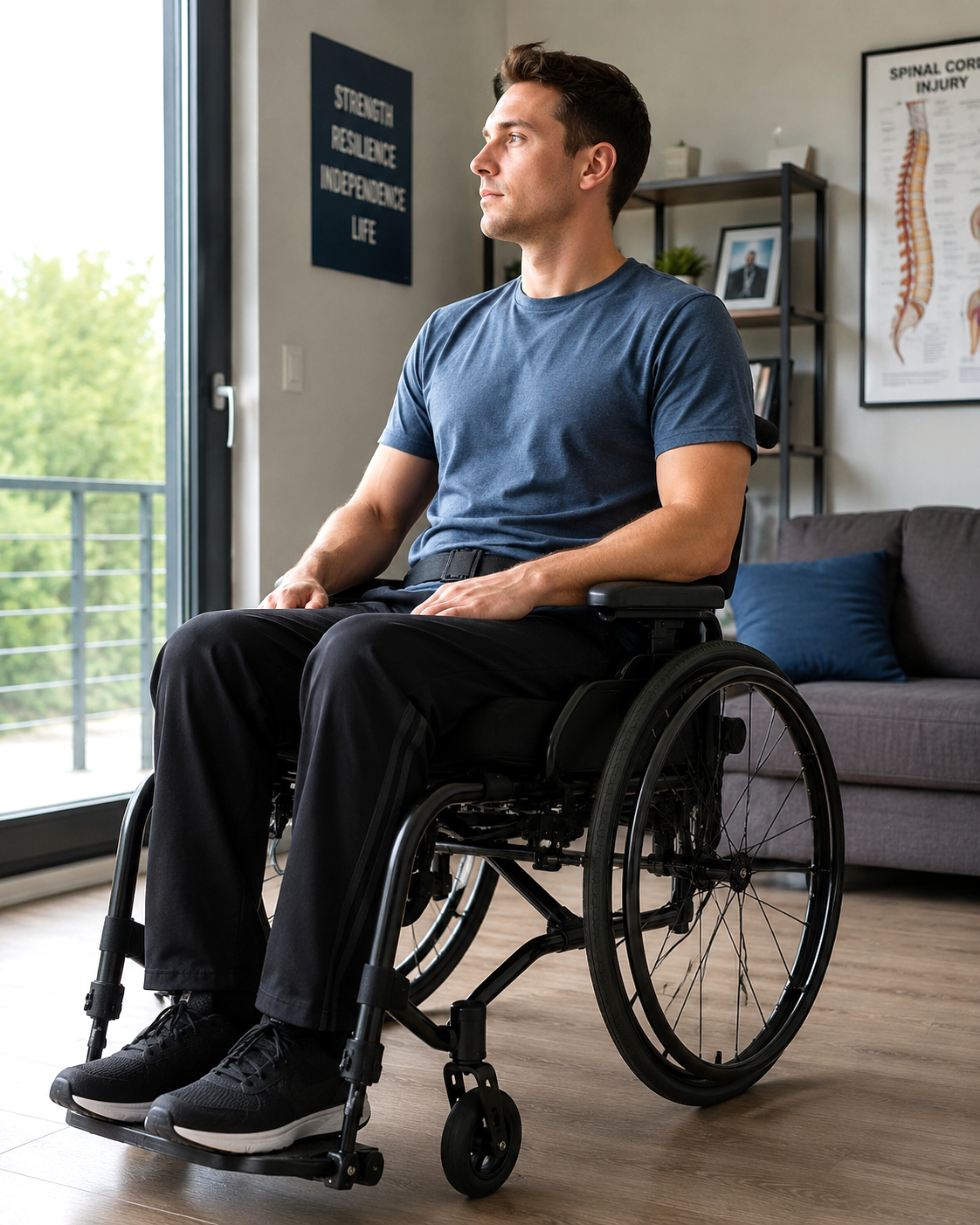
In patients with spinal cord injury, the combination of absent sensation, altered tissue physiology, and prolonged sitting duration creates extreme risk. The National Pressure Injury Advisory Panel (NPIAP) staging system applies equally to seating-related pressure injuries. Deep tissue pressure injury (DTPI) is a particular concern in seated patients with reduced sensation. The injury may begin at the ischium and progress inward before any surface change is visible.
Pressure mapping directly supports NPIAP-aligned clinical practice by providing:
- Objective interface pressure data at the ischial tuberosities and adjacent seating zones
- Quantified evidence of pressure redistribution achieved by specific cushion configurations
- Reproducible assessment data for longitudinal monitoring and cushion performance verification
- Clinical documentation supporting NPIAP-consistent surface selection and escalation decisions
Wheelchair Cushion Types Evaluated Using the Tactilus System
ANY CUSHION. ANY PATIENT.
The Tactilus wheelchair seating pressure mapping system is compatible with the full range of therapeutic seating cushions and surfaces.
- Air flotation cushions
- Alternating pressure seating cushions
- Foam contour cushions
- Gel cushions
- Hybrid foam/gel cushions
- Fluid immersion cushions
- Custom-molded seating systems
- Standard sling seat upholstery (baseline assessment)
Clinicians can map a patient on their current seating surface, then map on therapeutic alternatives to quantify the pressure reduction achieved by each. This side-by-side comparison, supporting up to three cushions simultaneously, is the most direct method available for documenting cushion selection decisions and supporting payor authorization.
Mattress Pressure Mapping
ASSESS THE FULL CARE ENVIRONMENT
Patients who use wheelchairs as their primary mobility device also spend significant time in bed. Interface pressure risk does not end when a patient transfers from wheelchair to mattress.
Blue Chip Medical’s Tactilus mattress pressure mapping system extends the same clinical methodology to bed surfaces, providing full-body supine pressure data that informs therapeutic mattress selection and repositioning protocols.
Facilities serving populations with both seating and mattress pressure needs can deploy both systems within a unified clinical pressure assessment program. Pressure data from both environments gives clinicians and wound care teams a complete picture of a patient’s total interface pressure exposure across the care day.
Purchasing the Tactilus Wheelchair Seating Pressure Mapping System
HOSPITALS, VA & REHABILITATION FACILITIES
Blue Chip Medical supplies the Tactilus wheelchair seating pressure mapping system to the following institutions. The system is supplied as a complete kit and is built for multi-patient clinical use.
- Acute care hospitals and health systems
- VA hospitals and federal healthcare facilities
- Inpatient and outpatient rehabilitation centers
- Long-term care and skilled nursing facilities
- Seating clinics and assistive technology programs
- Home health agencies and DME providers
- Wound care programs and clinics
- Teaching hospitals and clinical research institutions
800-795-6115
For volume pricing and institutional procurement
Frequently Asked Questions: Wheelchair Seating Pressure Mapping
What does a wheelchair seating pressure mapping system measure?
A wheelchair seating pressure mapping system measures interface pressure between a patient’s body and the seating surface across the full seat contact area. The data includes peak pressure at the ischial tuberosities and other seating zones, mean pressure, pressure distribution, load symmetry between quadrants, and center of gravity positioning, displayed in 2D and 3D color-mapped formats.
Why are wheelchair users at elevated risk for pressure injuries?
Wheelchair users, particularly those with spinal cord injury or neurological conditions, sustain concentrated interface pressure at the ischial tuberosities during seated positioning. Without intact sensation, they cannot detect discomfort or self-relieve pressure. Sustained pressure above capillary closing pressure (approximately 32 mmHg) restricts tissue perfusion, initiating ischemic injury that may begin as deep tissue pressure injury before any surface change is visible.
What is quadrant monitoring and why is it clinically important?
Quadrant monitoring divides the seating contact area into four regions, left/right and anterior/posterior, and displays pressure independently for each. This reveals asymmetric loading, where one ischial tuberosity bears disproportionately higher pressure than the other, indicating postural imbalance. Asymmetric loading is a significant predictor of localized pressure injury risk and a target for postural correction and cushion reconfiguration.
Who should perform wheelchair seating pressure mapping assessments?
Seating pressure mapping is most commonly performed by Assistive Technology Professionals (ATPs), Certified Rehabilitation Technology Suppliers (CRTs), physical therapists, and occupational therapists. Wound care nurses and CWOCNs also use seating mapping when evaluating patients with active sacral, ischial, or coccygeal pressure injuries.
Can pressure mapping data be used for wheelchair cushion DME justification?
Yes. Pressure mapping data provides objective clinical evidence that a specific therapeutic cushion achieves clinically appropriate pressure redistribution for an individual patient. This data supports Medicare and Medicaid DME documentation, insurance authorization for pressure-relieving and pressure-redistributing cushion categories, and wound care program records.
How does the Tactilus seating system compare up to three cushions?
The Tactilus Windows-based interface supports side-by-side display of pressure maps from up to three seating surfaces simultaneously. The clinician maps the patient on each cushion in sequence and the software displays the results in parallel, allowing direct comparison of peak pressure, mean pressure, pressure distribution, and quadrant loading across all three options.
What anatomical zones does the Tactilus seating pad cover?
The Tactilus seating pad covers a 20″ x 20″ contact area, capturing interface pressure at the ischial tuberosities, coccyx, sacrum, and surrounding soft tissue. The 1,024 sensing points provide discrete pressure data at any point in the contact region.
Does Blue Chip Medical supply wheelchair seating pressure mapping systems to VA hospitals?
Yes. Blue Chip Medical supplies the Tactilus wheelchair seating pressure mapping system to VA hospitals and federal healthcare facilities, in addition to acute care hospitals, rehabilitation centers, skilled nursing facilities, seating clinics, and wound care programs.
What is the difference between the Tactilus mattress system and the Tactilus seating system?
The Tactilus mattress system uses a 32″ x 80″ sensing pad with 1,612 sensing points for full-body supine pressure assessment. The Tactilus seating system uses a 20″ x 20″ sensing pad with 1,024 sensing points designed for seated position assessment. The seating system includes quadrant monitoring specific to the clinical demands of seating assessment. Both systems use the same Windows-based clinical interface and support 2D/3D visualization, session recording, and multi-surface comparison.
Is the Tactilus seating system manufactured in the United States?
Yes. Blue Chip Medical’s wheelchair seating pressure mapping systems are manufactured in the USA and built for multi-patient clinical use.