



 MENU
MENU
Mattress Pressure Mapping System: Tactilus
CLINICAL PRESSURE ASSESSMENT
Real-time interface pressure data for hospitals, VA hospitals, and long-term care facilities.
Blue Chip Medical supplies the Tactilus mattress pressure mapping system as part of a comprehensive clinical pressure assessment program serving hospitals, VA hospitals, skilled nursing facilities, rehabilitation centers, and wound care clinics across the United States.
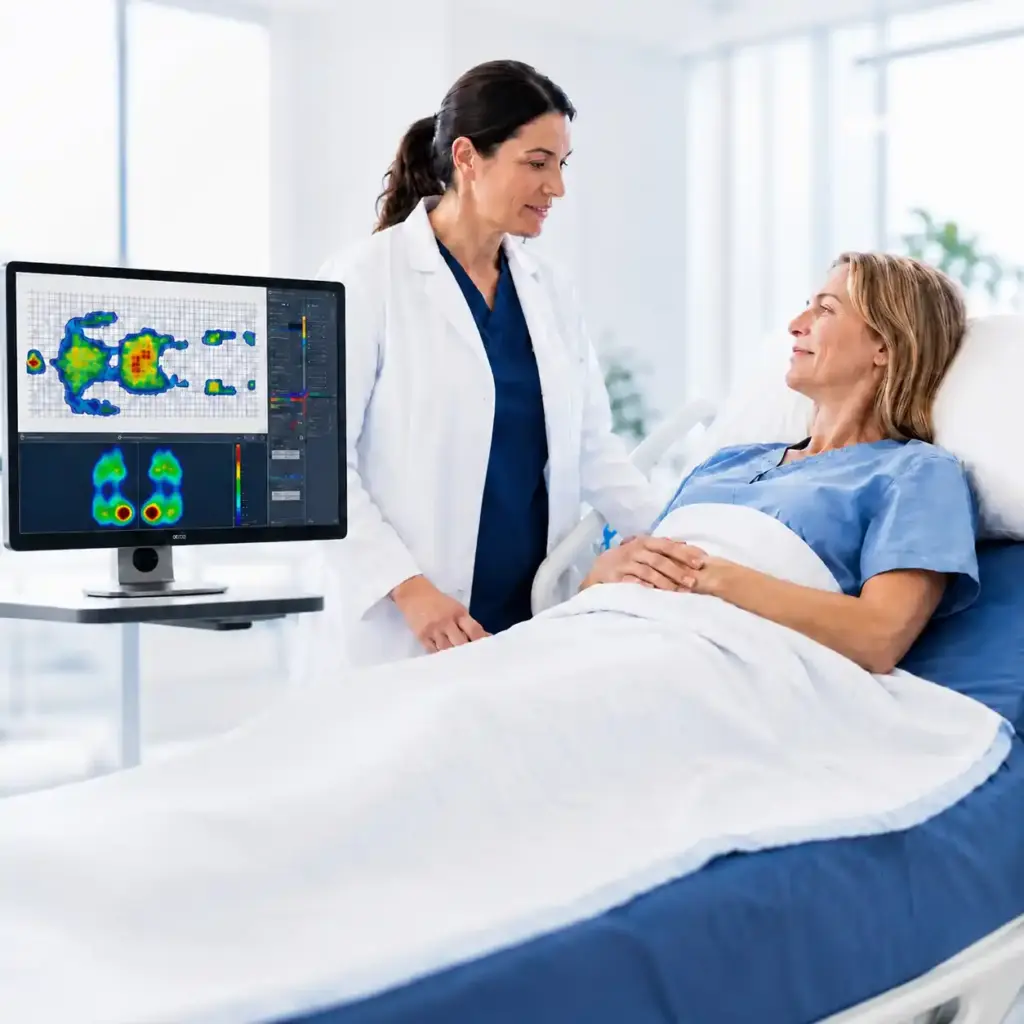
Tactilus Mattress Pressure Mapping System — Model TACT-Y-TS10
A mattress pressure mapping system measures interface pressure between a patient’s body and a support surface in real time. Clinicians use pressure mapping data to identify high-risk pressure zones, validate and compare therapeutic surface performance, optimize repositioning protocols, and document clinical decision-making for wound care programs. The Tactilus system provides 2D and 3D visualization across the full mattress contact area, with 1,612 discrete sensing points, a pressure range of 0–200 mmHg, and a Windows-based clinical interface that supports session recording, surface comparison, and data export. Manufactured in the USA and built for multi-patient clinical use.
What Mattress Pressure Mapping Measures and Why It Matters Clinically
PRESSURE DATA. CLINICAL CLARITY.
Pressure injuries develop when sustained mechanical forces compress soft tissue between a bony prominence and an external surface, restricting microcirculatory perfusion and causing tissue ischemia. Interface pressure — the force per unit area at the contact point between a patient’s body and the support surface — is the primary measurable variable in that process.
Capillary closing pressure is typically cited at 32 mmHg. Sustained interface pressures above that threshold reduce or eliminate perfusion to the overlying tissue. Duration compounds the effect: low pressures sustained over hours cause damage that brief high-pressure episodes may not. Standard clinical assessment tools such as the Braden Scale identify patients at risk but do not quantify the interface pressure a specific patient generates on a specific surface. Pressure mapping does.
A mattress pressure mapping system captures:
- Peak pressure index (PPI) at high-risk anatomical zones
- Mean pressure across the full contact area
- Pressure distribution patterns indicating adequate or inadequate load spreading
- Contact area between the patient’s body and the surface
- Immersion depth and envelopment characteristics
- Real-time pressure shifts during position changes or Fowler elevation
This data gives clinicians an objective basis for surface selection, repositioning protocol adjustment, and wound care program documentation that subjective assessment cannot provide.
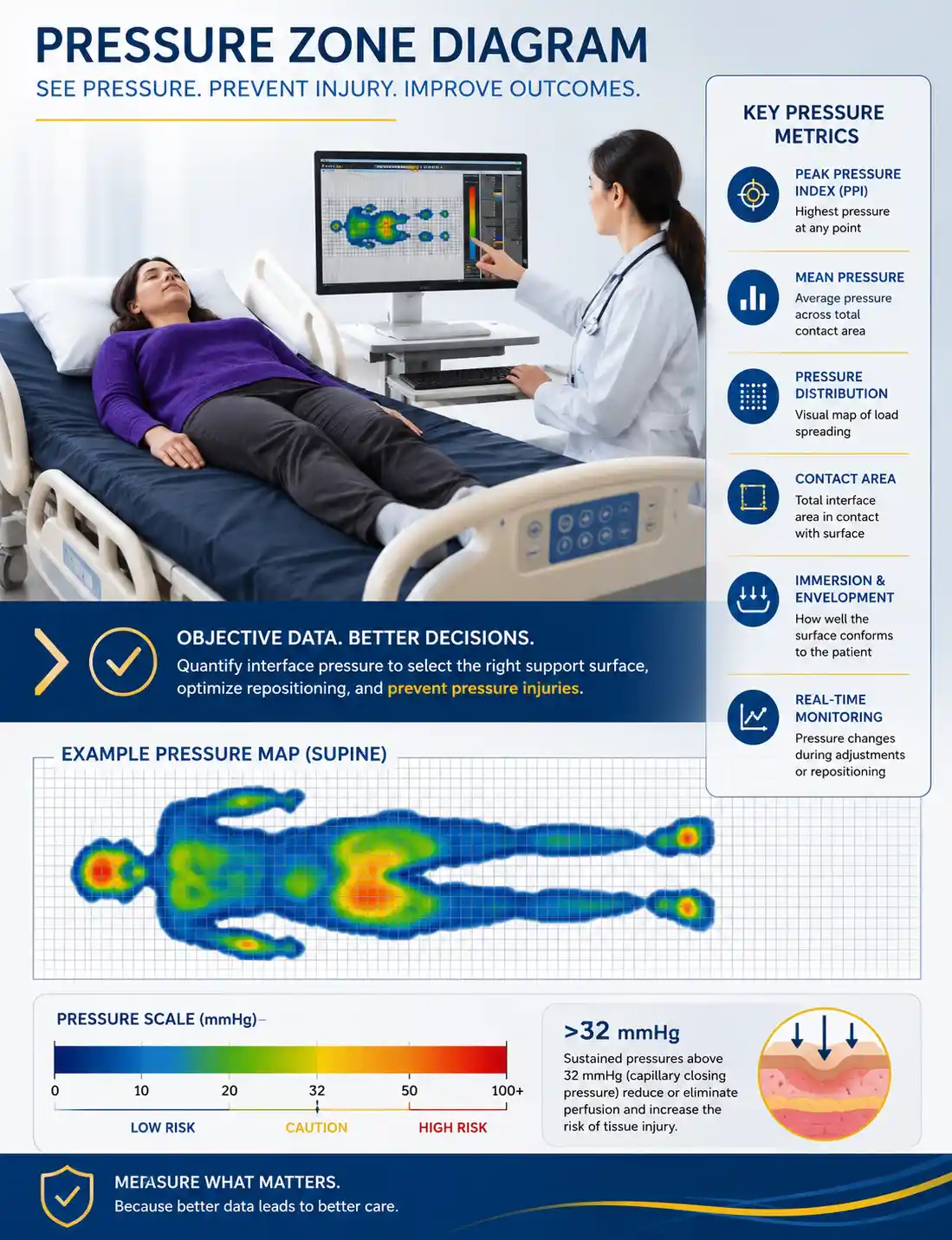
Blue Chip Medical’s Tactilus Mattress Pressure Mapping System
1,612 SENSING POINTS. ZERO GUESSWORK.
The Tactilus system is built on piezoresistive sensor technology, which measures resistance changes in proportion to applied pressure across 1,612 discrete sensing points covering the full mattress contact area. The result is precise, spatially resolved pressure data that clinicians can act on immediately.
System Specifications
| Total Sensing Points | 1,612 |
| Mat Size | 32″ x 80″ |
| Total Sensor Area | 73.2″ x 30.7″ |
| Overall Pad Dimensions | 78.7″ x 35″ x .098″ |
| Pressure Range | 0–200 mmHg |
| Scan Speed (USB) | 50 Hz |
| Scan Speed (WiFi) | 10 Hz |
| Transmission Mode | USB or Wireless |
| Model Number | TACT-Y-TS10 |
| Country of Manufacture | USA |
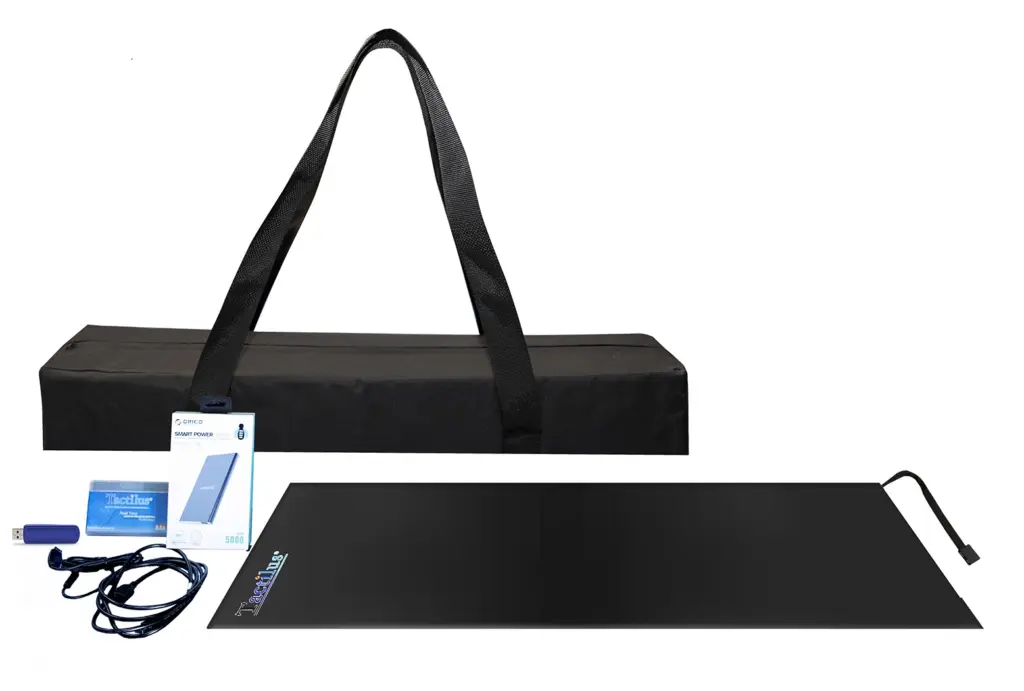
Kit Contents — Model TACT-Y-TS10
- Sensing pad
- Battery pack
- Cables
- Memory stick
- Windows-based software
- Soft carry case with strap
Clinical Software Platform
DATA CLINICIANS CAN ACT ON
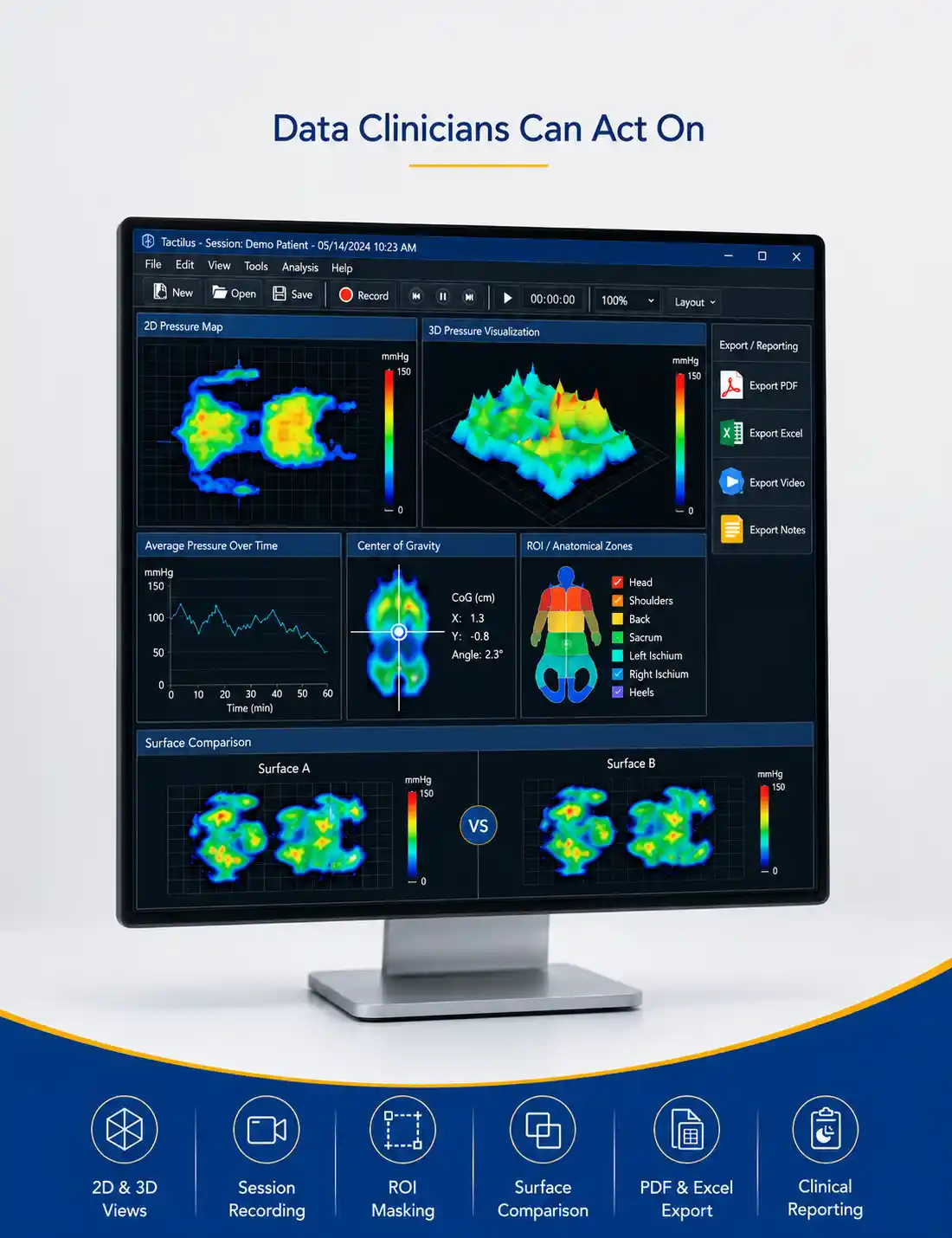
The Tactilus Windows-based interface is designed for clinical deployment, not laboratory use. It displays pressure data in high-definition 2D and 3D formats, supports session recording, and generates exportable outputs compatible with wound care documentation and institutional reporting requirements.
- High-definition 2D and 3D pressure visualization
- Real-time session recording and playback
- Center of gravity indicator
- Average pressure graphing over time
- Region of interest (ROI) masking for anatomical zone analysis
- Side-by-side surface comparison — up to three surfaces simultaneously
- Notes field for clinical documentation
- Video export (.AVI format)
- Data export to Excel
- PDF report generation and sharing
The surface comparison function is particularly relevant for institutional purchasing decisions. Clinicians can map a patient on multiple surfaces and document which surface produces the most clinically appropriate pressure distribution for that individual. This supports both clinical decision-making and surface procurement justification.
Who Uses Mattress Pressure Mapping and How
BUILT FOR MULTIDISCIPLINARY TEAMS
Pressure mapping is a multidisciplinary clinical tool. The following roles integrate Tactilus data into patient care and facility operations.
Wound Care Nurses and CWOCNs
Wound care nurses use pressure mapping to identify patients whose interface pressure exceeds safe thresholds on their current surface, select appropriate therapeutic alternatives, and document the clinical rationale for surface upgrades. Mapping data supports escalation from static foam to alternating pressure or lateral rotation therapy when interface pressure findings warrant it.
Physical and Occupational Therapists
PTs and OTs use pressure mapping as a functional assessment tool and as a biofeedback device. Showing a patient a real-time pressure map of their own contact area demonstrates positioning concepts that verbal instruction alone cannot convey. Therapists also use mapping data to justify DME recommendations to payors.
Clinical Educators and Research Staff
Teaching hospitals and research institutions use the Tactilus system to train clinical staff on pressure dynamics, demonstrate support surface performance, and collect interface pressure data for outcomes research and clinical trials.
Directors of Nursing and Clinical Program Managers
DONs and clinical directors use pressure mapping programs to support facility-wide pressure injury prevention initiatives, demonstrate due diligence for CMS Hospital-Acquired Condition (HAC) compliance, and document the clinical basis for support surface procurement decisions.
Clinical Applications by Care Setting
FROM ICU TO LONG-TERM CARE
The Tactilus mattress pressure mapping system is deployed across the full continuum of care. Each setting presents distinct patient populations, clinical workflows, and documentation requirements that pressure mapping directly supports.
Hospitals and Acute Care
ICU and acute care patients, particularly those who are sedated, post-surgical, or neurologically compromised, cannot self-reposition and cannot communicate discomfort. Standard two-hour repositioning schedules do not account for individual variation in interface pressure. Pressure mapping provides objective data to individualize repositioning intervals and surface selection for high-risk patients. Research on continuous bedside pressure mapping (CBPM) technology has documented up to 88% overall reduction in pressure injury risk in peer-reviewed studies.
VA Hospitals
VA hospital patient populations present elevated pressure injury risk due to high rates of spinal cord injury, neurological conditions, and complex comorbidities. Pressure mapping supports individualized surface selection and rehabilitation equipment justification for veterans across inpatient and outpatient settings. Blue Chip Medical supplies the Tactilus system directly to VA hospitals and federal healthcare facilities.
Long-Term Care and Skilled Nursing Facilities
Residents in long-term care settings often remain on the same surface for extended periods. Pressure mapping identifies residents whose current surface is insufficient, supports clinical decisions to upgrade therapy, and generates the documentation facilities need for wound care program compliance and survey readiness.
Rehabilitation Facilities
Rehab settings use pressure mapping to optimize surfaces during the acute rehabilitation phase and to configure appropriate seating and positioning equipment prior to discharge. Mapping data informs both mattress and wheelchair cushion selection, connecting directly to Blue Chip’s Tactilus wheelchair seating pressure mapping system.

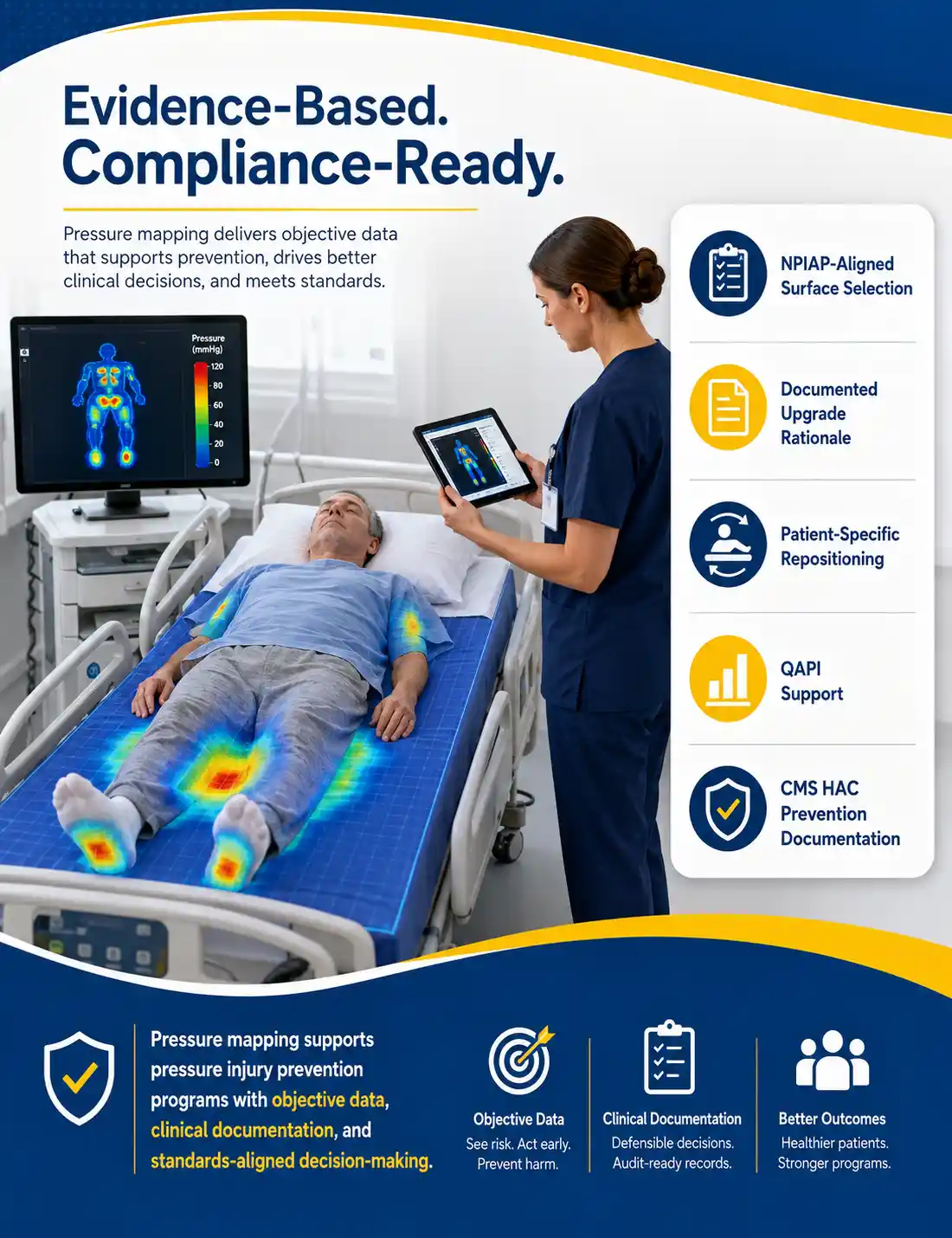
Pressure Mapping and Pressure Injury Prevention Standards
EVIDENCE-BASED. COMPLIANCE-READY.
The National Pressure Injury Advisory Panel (NPIAP) establishes the clinical framework for pressure injury prevention and management in the United States. The NPIAP staging system classifies pressure injuries from Stage I through Stage IV, plus unstageable injuries and deep tissue pressure injury (DTPI).
Pressure mapping does not replace clinical staging or wound assessment. It provides objective interface pressure data that informs surface selection and repositioning decisions within a broader pressure injury prevention program. Used consistently, pressure mapping supports:
- Evidence-based surface selection aligned with NPIAP guidelines
- Documented clinical rationale for therapeutic surface upgrades
- Repositioning protocol development grounded in patient-specific pressure data
- Quality Assurance and Performance Improvement (QAPI) program data in SNF settings
- CMS HAC documentation demonstrating proactive prevention measures
Surface Types Evaluated Using the Tactilus System
ANY SURFACE. ANY PATIENT.
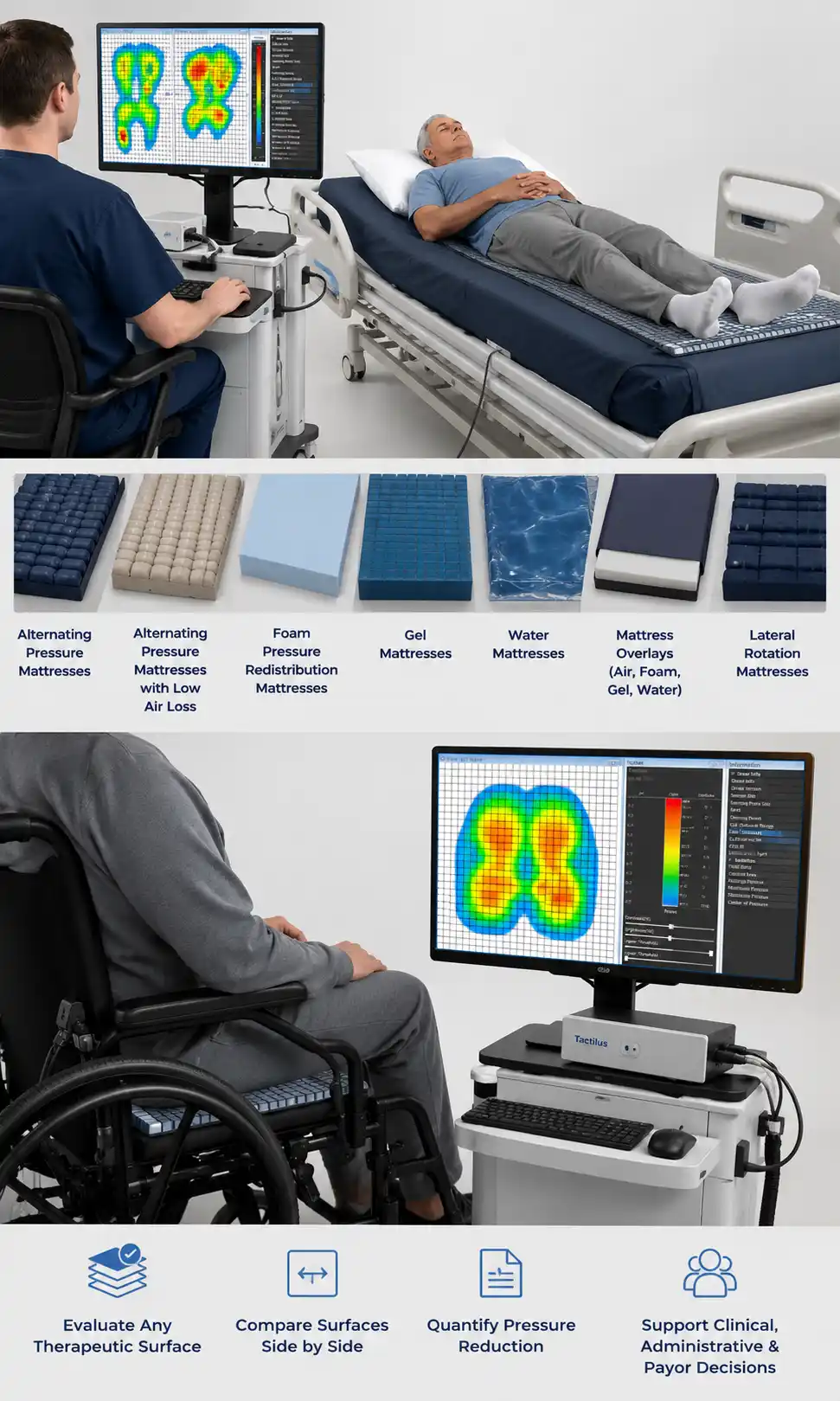
The Tactilus mattress pressure mapping system is compatible with the full range of therapeutic support surfaces. Clinicians can map a patient on their current surface, then map again after switching to a therapeutic alternative to quantify the pressure reduction achieved.
- Alternating pressure mattresses
- Alternating pressure mattresses with low air loss
- Foam pressure redistribution mattresses
- Gel mattresses
- Water mattresses
- Mattress overlays (air, foam, gel, water)
- Lateral rotation mattresses
This side-by-side comparison is the most direct method available for validating surface selection decisions and communicating them to wound care teams, administrators, and payors.

Wheelchair Seating Pressure Mapping
COMPLETE THE CLINICAL PICTURE
A patient’s total interface pressure exposure does not begin and end with the mattress. Patients who use wheelchairs as their primary mobility device spend significant portions of the care day in seated positioning, where concentrated pressure at the ischial tuberosities generates some of the highest interface pressures encountered in any clinical setting.
Blue Chip Medical’s Tactilus wheelchair seating pressure mapping system extends the same clinical methodology to seating surfaces using a 20″ x 20″ piezoresistive sensing pad with 1,024 discrete sensing points, quadrant monitoring for asymmetric load assessment, and side-by-side comparison of up to three cushions simultaneously. The seating and mattress systems share the same Windows-based clinical interface, allowing facilities to operate both within a unified clinical pressure assessment program.
For rehabilitation facilities, skilled nursing facilities, VA hospitals, and wound care programs managing patients with both mattress and seating pressure exposure, deploying both systems provides a complete picture of interface pressure risk across the full care day.
Purchasing the Tactilus Mattress Pressure Mapping System
HOSPITALS, VA AND LONG-TERM CARE
Blue Chip Medical supplies the Tactilus mattress pressure mapping system to:
- Acute care hospitals and health systems
- VA hospitals and federal healthcare facilities
- Long-term care and skilled nursing facilities
- Rehabilitation and long-term acute care centers
- Teaching hospitals and clinical research institutions
- Wound care programs and clinics
The system is sold as a complete kit (Model TACT-Y-TS10) and is built to withstand multi-patient clinical use. Wireless and USB transmission options support deployment across varied clinical environments. For volume pricing, institutional procurement, and clinical support, contact Blue Chip Medical directly.
Call: 800-795-6115
Frequently Asked Questions: Mattress Pressure Mapping Systems
What does a mattress pressure mapping system measure?
A mattress pressure mapping system measures interface pressure — the force per unit area between a patient’s body and the support surface — across the full mattress contact area. The data includes peak pressure, mean pressure, pressure distribution, and contact area, displayed in 2D and 3D color-mapped formats.
What is interface pressure and why is it clinically significant?
Interface pressure is the mechanical force applied per unit area at the contact point between a patient’s body and a support surface. Sustained interface pressure above approximately 32 mmHg reduces perfusion to overlying soft tissue, leading to ischemia, tissue deformation, and, if uncorrected, pressure injury development.
How do clinicians use pressure mapping data to prevent pressure injuries?
Clinicians use pressure mapping data to identify high-risk anatomical zones, validate whether a current surface provides adequate pressure redistribution, select and compare therapeutic alternatives, adjust repositioning intervals based on objective findings, and document clinical decisions for wound care programs and payor justification.
What is the Tactilus pressure mapping system?
Tactilus is a piezoresistive pressure mapping technology platform. Blue Chip Medical’s Tactilus mattress system uses 1,612 sensing points to capture real-time interface pressure data across the full mattress contact area, displayed via a Windows-based clinical interface with 2D and 3D visualization, session recording, and data export capabilities.
Who should perform pressure mapping assessments?
Pressure mapping is most commonly performed by wound care nurses (including CWOCNs), physical therapists, occupational therapists, and certified rehabilitation technology suppliers. Clinical educators and research staff also use pressure mapping in teaching and research settings.
Can pressure mapping data be used for DME documentation and payor justification?
Yes. Pressure mapping data provides objective clinical evidence to support therapeutic surface recommendations, which can be used in DME justification documentation, wound care program records, and CMS HAC compliance documentation.
What surfaces can be evaluated using the Tactilus mattress pressure mapping system?
The Tactilus system is compatible with alternating pressure mattresses, low air loss mattresses, foam mattresses, gel mattresses, water mattresses, and all standard mattress overlay types. It can compare up to three surfaces side by side.
What is the difference between episodic pressure mapping and continuous bedside pressure monitoring?
Episodic pressure mapping captures interface pressure data at a specific point in time during surface evaluation or repositioning assessment. Continuous bedside pressure monitoring (CBPM) tracks pressure in real time throughout a patient’s stay. Both approaches generate clinically actionable data; the appropriate use depends on clinical goals and care setting.
Is the Tactilus system manufactured in the United States?
Yes. Blue Chip Medical’s mattress pressure mapping systems are manufactured in the USA and built for the durability demands of multi-patient clinical use.
Does Blue Chip Medical sell pressure mapping systems to VA hospitals?
Yes. Blue Chip Medical supplies the Tactilus mattress pressure mapping system and Tactilus wheelchair seating pressure mapping system to VA hospitals and federal healthcare facilities, in addition to acute care hospitals, skilled nursing facilities, rehabilitation centers, and wound care programs.