



 MENU
MENU
Immersion
Immersion is the ability of a therapeutic support surface to allow the body to sink into the mattress in a controlled manner so that the patient’s weight is distributed over a larger surface area. By increasing the contact area between the patient and the mattress, immersion helps reduce concentrated pressure on vulnerable bony prominences such as the sacrum, coccyx, hips, shoulders, and heels.
For patients with Stage III, Stage IV, and unstageable pressure injuries, reducing peak interface pressure is critical because excessive localized pressure can further restrict blood flow, damage tissue, and delay healing. A surface with effective immersion helps minimize these high-pressure points while improving patient comfort and stability.
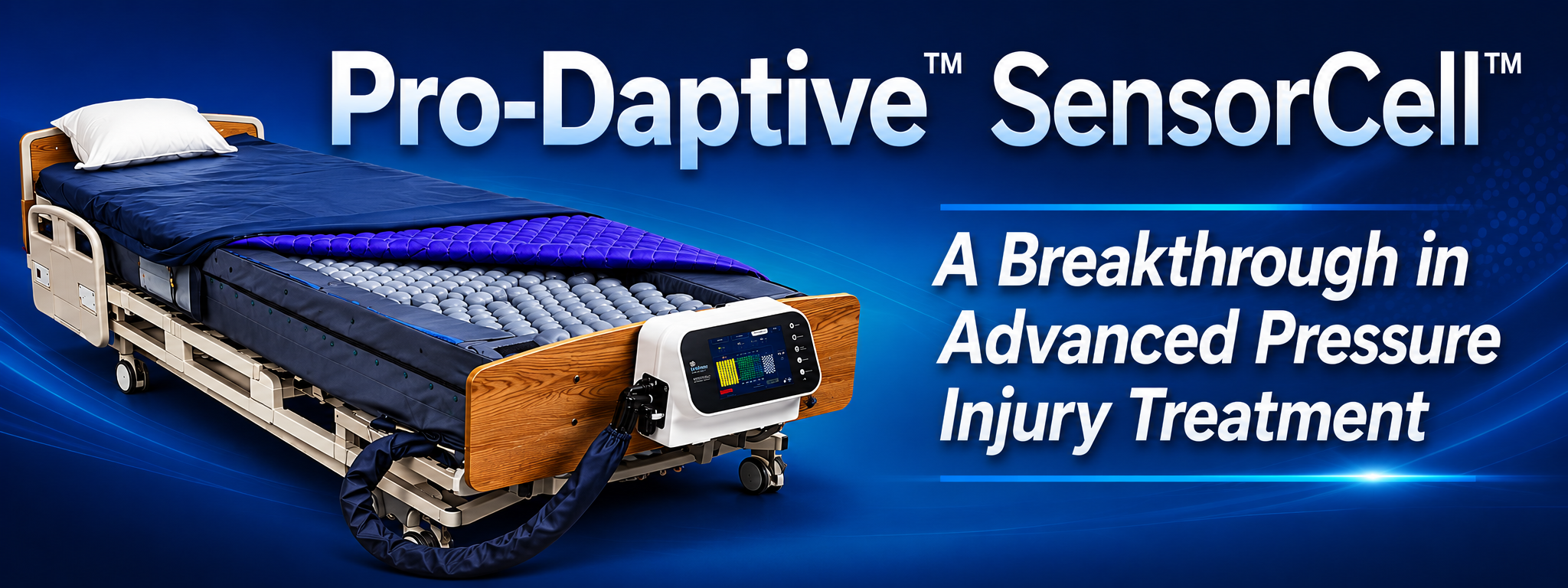
Pro-Daptive™ SensorCell™ provides advanced immersion therapy through its adaptive floatation technology and independently responsive SensorCell™ design. Similar to Air Fluidized Therapy (AFT), Pro-Daptive™ allows the patient to immerse into the support surface to maximize pressure redistribution and reduce localized tissue loading. However, unlike traditional AFT systems that provide generalized immersion without targeted pressure control, Pro-Daptive™ continuously adapts to the patient’s unique body shape, positioning, and clinical pressure redistribution needs in real time, delivering both immersion and customizable therapeutic support.
The system allows the patient to gently settle into the support surface while maintaining proper therapeutic support and alignment. This controlled immersion helps:
- Redistribute pressure more evenly across the body
- Reduce concentrated tissue loading
- Minimize shear and friction forces
- Improve envelopment around vulnerable anatomy
- Enhance patient comfort and stability
- Support blood flow and tissue perfusion
Pro-Daptive™ combines immersion with customizable pressure redistribution and adaptive support, creating a therapeutic environment that helps protect compromised tissue while supporting the healing of advanced pressure injuries. The result is a more clinically responsive surface that addresses the limitations commonly found in traditional Group II alternating pressure mattresses and conventional Air Fluidized Therapy systems.
New Products



Continuing Education Program

For Clinical or Technical Assistance
CALL 800 795-6115
For technical assistance or help choosing the correct product for your specific application.

Recent Blog
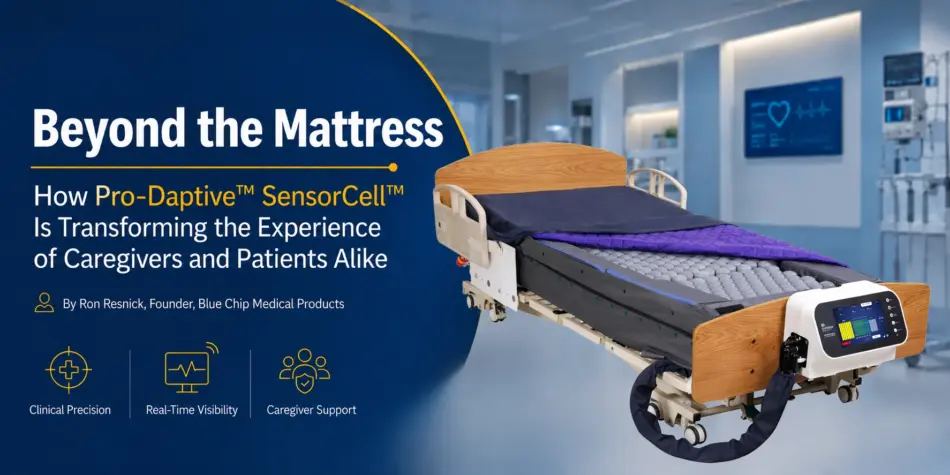
Beyond the Mattress: How Pro-Daptive™ SensorCell™ Is Transforming the Experience of Caregivers and Patients Alike
The ProDaptive SensorCell mattress provides ultimate pain relief for seniors, while making repositioning safer and easier for family caregivers.
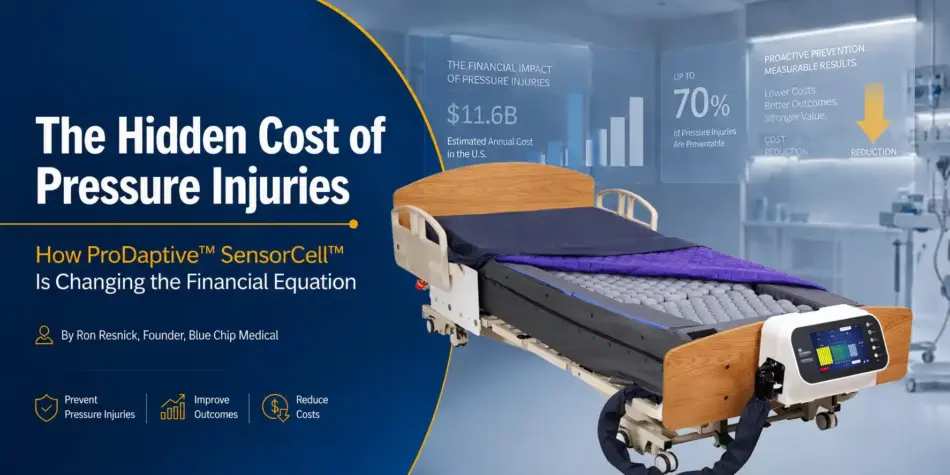
The Hidden Cost of Pressure Injuries, and How ProDaptive™ SensorCell™ Is Changing the Financial Equation
The Prodaptive SensorCell mattress helps seniors stay independent and pain-free at home, while avoiding costly hospital stays.

Supporting K9 Heroes With Custom Transport Pads Built for Safety and Fit
Blue Chip Medical donates custom, medical-grade transport pads to keep service dogs comfortable, safe, and supported on duty.