



 MENU
MENU
Beyond the Mattress: How Pro-Daptive™ SensorCell™ Is Transforming the Experience of Caregivers and Patients Alike
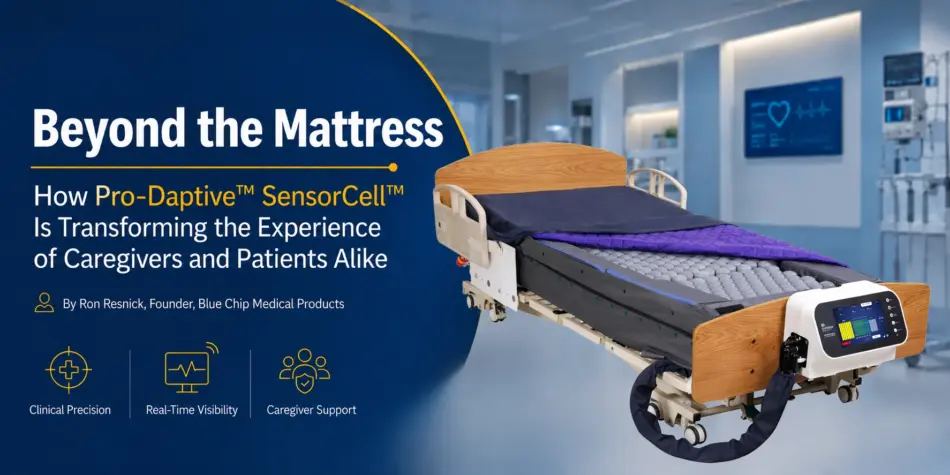
By Ron Resnick, Founder, Blue Chip Medical
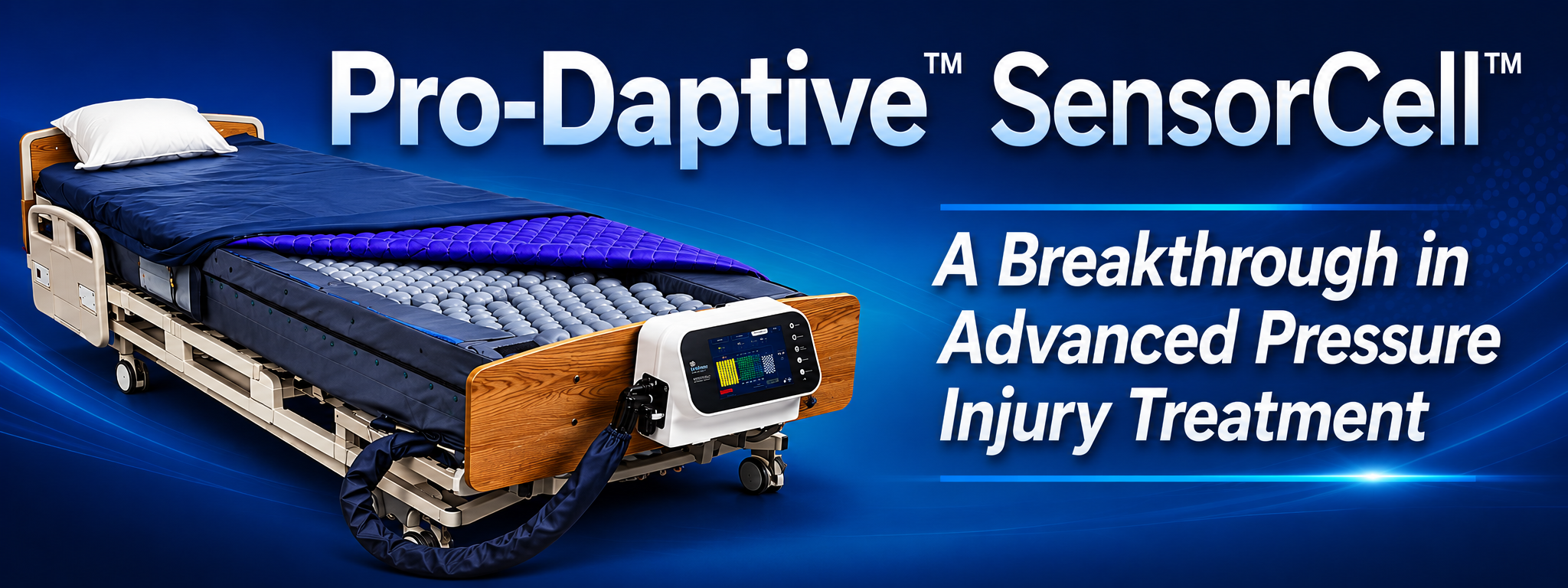
When people ask me what Pro-Daptive™ SensorCell™ is, the simplest answer, Pro-Daptive™ is the future of advanced pressure injury treatment. But that description, while accurate, doesn’t capture what I find most meaningful about this technology.
What moves me is not just what Pro-Daptive™ SensorCell™ does to a wound. It’s what it does for a patient and their care team: the nurse who has been repositioning patients every two hours for an entire shift, the wound care specialist searching for a way to protect tissue that has already been through too much, and the patient lying there hoping that today will be a little better than yesterday.
Wound care for advanced pressure injuries has always been about outcomes. But outcomes are created by people. And any technology that doesn’t account for the full human experience of care is only telling half the story.
What Clinicians Have Always Needed
Wound care specialists are trained to make precise, individualized clinical decisions. The frustration many of them have lived with for years is that the support surfaces available to them have not matched that precision. Traditional alternating pressure systems offer broad therapeutic settings, typically calibrated by patient weight, and that’s largely where the customization ends. Air Fluidized Therapy goes further in terms of immersion, but it is preset, difficult to adjust, and provides no mechanism for targeting specific anatomical areas with different pressure profiles.
In practice, this means clinicians have often been making highly individualized clinical judgments and then placing patients on surfaces that treat everyone more or less the same.
Pro-Daptive™ SensorCell™ changes that relationship entirely. For the first time, a clinician can look at a patient, assess the specific location and nature of a wound, and then configure the support surface to match that assessment with genuine precision. Cavity Creation allows for complete offloading of an existing wound at the coccyx, sacrum, or buttocks. Heel Float enables full suspension of the heel for advanced heel wound treatment. Custom Immersion allows the surface to be tuned to the individual patient’s anatomy and clinical condition, not just their weight.
This is what clinical decision-making is supposed to look like. The tool should rise to meet the clinician’s expertise, not constrain it.
Real-Time Visibility That Changes the Standard of Care
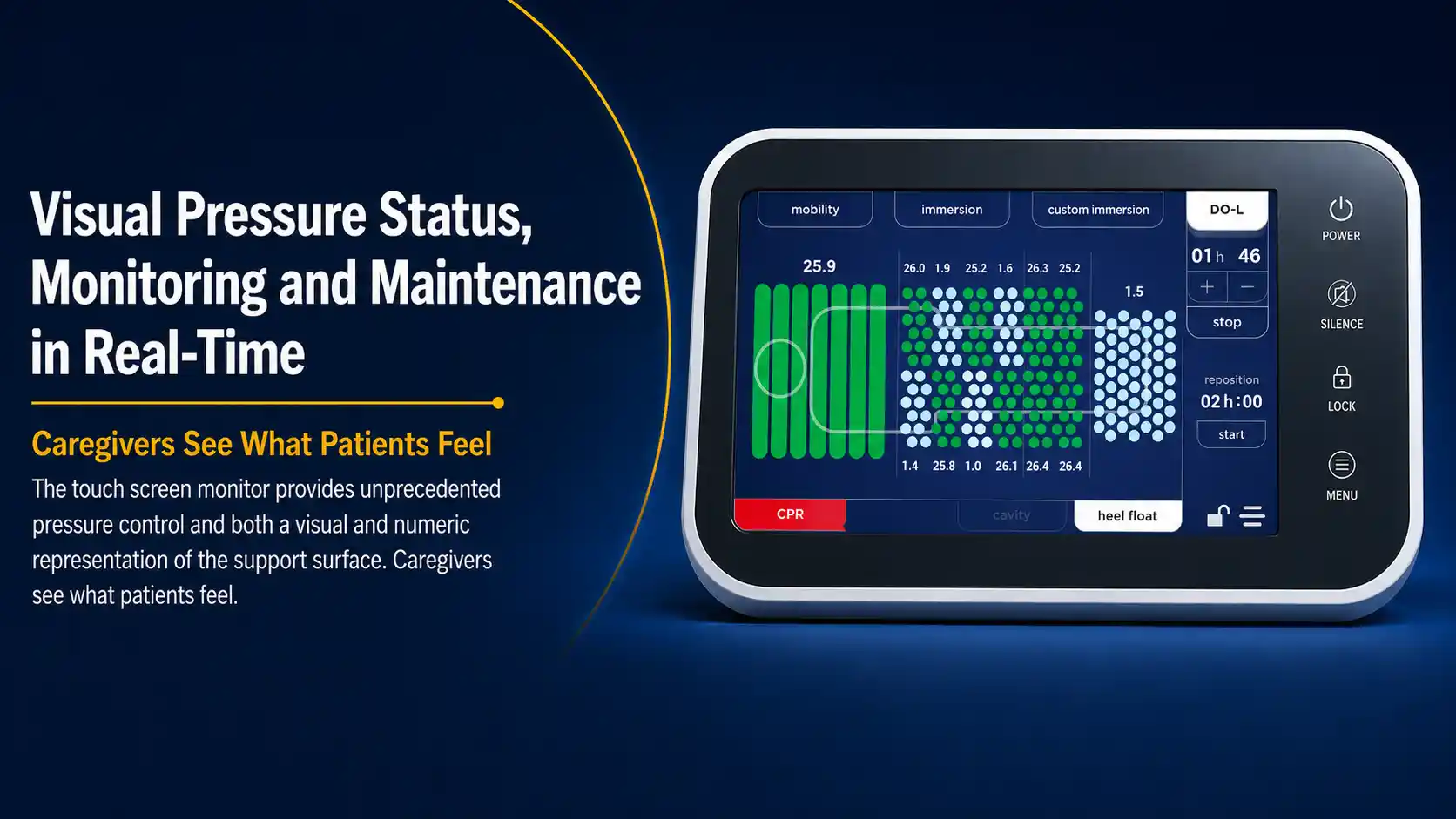
One of the most significant shifts Pro-Daptive™ SensorCell™ brings to clinical practice is visibility. The touchscreen monitor provides both a visual and numeric representation of the support surface in real time. For the first time, caregivers can see what the patient feels.
That may sound simple. In practice, it is revolutionary.
Until now, the therapeutic relationship between a patient and their support surface has been largely invisible. Clinicians have had to infer what was happening reactively based on clinical signs, wound progression, and educated judgment. Pro-Daptive’s real-time pressure display gives clinicians the tools to be proactive. If a patient shifts position, caregivers can see the change in pressure distribution and respond immediately. If a targeted area is not achieving the desired offloading, it can be adjusted on the spot.
This kind of real-time feedback loop doesn’t just improve individual decisions. Over time, it builds a deeper clinical understanding of how individual patients respond to surface therapy, and that knowledge improves care for every patient who follows.
Six Therapeutic Modes, One Patient at a Time
Pro-Daptive™ SensorCell™ offers six distinct therapeutic modes: Immersion, Custom Immersion, Mobility, Heel Float, Dynamic Offloading, and Cavity Creation. For clinicians and nursing staff, this breadth of options means that the surface can evolve with the patient’s condition rather than remaining static while the patient changes around it.
A patient admitted with a Stage IV sacral wound may begin in Cavity Creation mode to completely offload the wound site. As the wound progresses through the healing continuum, the therapeutic approach can be adjusted accordingly. When the care team needs to reposition the patient, Mobility Mode firms the surface to reduce physical effort. When the patient is resting, the surface returns to the mode best suited to the current clinical priority.
This adaptability is not a convenience feature. It is a core clinical advantage that traditional surfaces simply cannot offer.
The Impact on Nursing Staff
Pressure injury care is physically demanding work. Repositioning a patient in a hospital bed, particularly a heavier patient or one with fragile skin, requires significant effort and carries real injury risk for caregivers. In many facilities, turning and repositioning schedules are among the most labor-intensive components of wound care nursing.
Pro-Daptive’s Mobility Mode addresses this directly. By creating a firm support surface at 75 mmHg on demand, it reduces the physical effort required to reposition patients by more than 30%. That is not a marginal improvement. Across a full nursing shift, across a full unit, and across a full year, that reduction translates into less physical strain, fewer caregiver injuries, and more sustainable workflows.
The system also reduces the need for positioning wedges and pillows to maintain patient placement. After repositioning, the SensorCells’ envelopment cradles and stabilizes the patient comfortably in the new position, providing support that wedges and pillows approximate but rarely achieve consistently.
For nursing staff who spend a significant portion of every shift managing patient positioning, these improvements are not small quality-of-life upgrades. They are meaningful changes to the physical demands and complexity of the job.
The Shear Problem, Finally Addressed
Shear is one of the most destructive forces in pressure injury development, and one of the most difficult to manage with traditional support surfaces. When the head of a bed is elevated, patients tend to slide downward while their skin remains relatively stationary against the surface. The resulting tissue distortion beneath the skin damages capillaries, disrupts blood flow, and accelerates skin breakdown, often in ways that aren’t visible until significant damage has already occurred.
Pro-Daptive’s Automatic 2-Stage Fowler Function addresses this problem directly. As the head of the bed is elevated, the mattress intelligently adapts to the patient’s body movement, maintaining alignment and reducing the downward sliding that generates shear forces. At high-risk areas like the sacrum and coccyx, this controlled, responsive support actively protects tissue during repositioning and during extended periods of bed elevation.
For clinicians who understand how much damage shear causes, and how difficult it has been to address it effectively with conventional surfaces, this capability represents a meaningful clinical advance.
What This Means for Patients
Everything described above converges on one outcome: a better experience and better results for the patient.
Pressure injuries at Stage III, Stage IV, and beyond are serious, painful, and profoundly disruptive to quality of life. Patients with advanced wounds often spend extended periods in care settings, face painful dressing changes and procedures, and carry the physical and emotional weight of a condition that can feel like it is progressing faster than it is healing.
Pro-Daptive™ SensorCell™ creates a healing environment that is genuinely responsive to the individual patient. The surface adjusts to their anatomy, responds to their position, and maintains the pressure conditions that support tissue recovery. The unique Low Air Loss therapy is adjustable. This allows care givers to customize a microclimate based on patient need. Built into the Vyvex-III cover, the Low Air Loss therapy continuously manages the microclimate at the mattress surface, keeping the skin cool and dry and protected from the moisture that accelerates breakdown.
Patients also experience greater comfort during repositioning, greater surface stability between repositioning events, and the benefit of a care team that has better tools, better visibility, and less physical burden to contend with during every interaction.
Better tools don’t just improve outcomes in the abstract. They give clinicians and nurses more capacity to focus on the patient in front of them, and patients feel that difference.
A New Standard for What Support Surfaces Should Do
When I reflect on what Pro-Daptive™ SensorCell™ represents, I keep coming back to a straightforward idea: support surfaces should be customizable to the patient’s need and support the full continuum of care.
They should give clinicians the precision their training demands. They should reduce the physical burden on nursing staff so that energy can go where it matters most. They should respond to each patient as an individual, not as a demographic. And they should make the invisible visible, so that every member of the care team can see what is happening and respond with confidence.
That is the standard we built Pro-Daptive™ SensorCell™ to meet. And based on what we are hearing from clinicians, nurses, and patients, it is a standard that is long overdue.
QUESTIONS?
SPEAK WITH A PRESSURE INJURY SUPPORT SURFACE EXPERT
To learn whether Pro-Daptive™ is the right fit for your care environment, contact Blue Chip Medical at
1 (800) 795-6115.
For more information please visit: Pro-Daptive™ SensorCell™


Ron Resnick is the founder of Blue Chip Medical and has spent decades developing innovative solutions for advanced wound care and pressure injury management. To learn more about Pro-Daptive™ SensorCell™ or to speak with a clinical specialist, visit the Pro-Daptive product page.
New Products



Continuing Education Program

For Clinical or Technical Assistance
CALL 800 795-6115
For technical assistance or help choosing the correct product for your specific application.

Recent Blog
Beyond the Mattress: How Pro-Daptive™ SensorCell™ Is Transforming the Experience of Caregivers and Patients Alike
The ProDaptive SensorCell mattress provides ultimate pain relief for seniors, while making repositioning safer and easier for family caregivers.
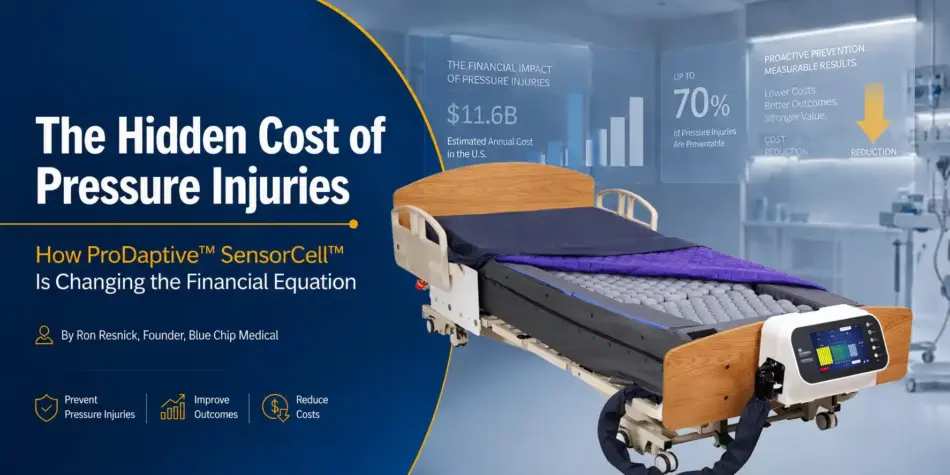
The Hidden Cost of Pressure Injuries, and How ProDaptive™ SensorCell™ Is Changing the Financial Equation
The Prodaptive SensorCell mattress helps seniors stay independent and pain-free at home, while avoiding costly hospital stays.

Supporting K9 Heroes With Custom Transport Pads Built for Safety and Fit
Blue Chip Medical donates custom, medical-grade transport pads to keep service dogs comfortable, safe, and supported on duty.