



 MENU
MENU
The Hidden Cost of Pressure Injuries, and How ProDaptive™ SensorCell™ Is Changing the Financial Equation
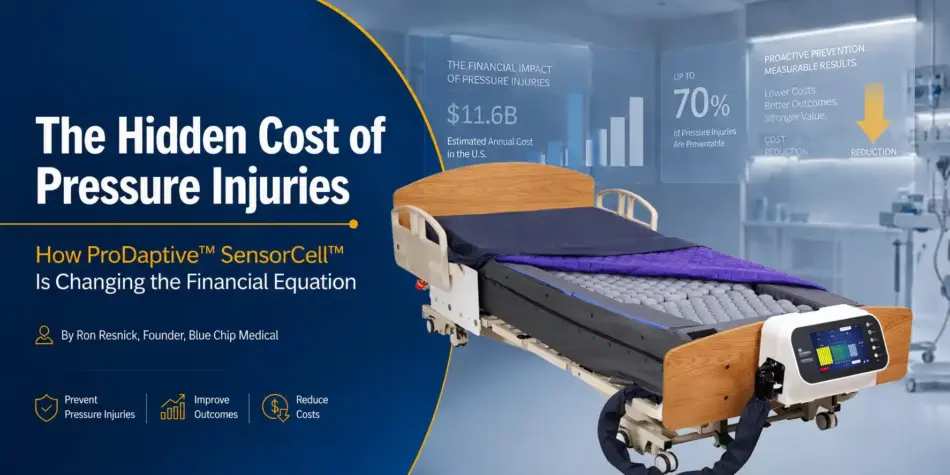
By Ron Resnick, Founder, Blue Chip Medical
In my decades in the wound care industry, I’ve seen hospitals and long-term care facilities grapple with a problem that never seems to get smaller: the staggering financial burden of pressure injuries. We talk a great deal about the human toll, and rightly so. But the economic reality of advanced pressure injuries is one that every administrator, CFO, and clinical director needs to fully understand, because it is quietly draining resources at a scale that most institutions have simply come to accept as unavoidable.
It doesn’t have to be.
The True Cost of Pressure Injuries
The numbers are sobering. The Agency for Healthcare Research and Quality (AHRQ) estimates that hospital-acquired pressure injuries (HAPIs) add more than $26 billion annually to U.S. healthcare costs. Individual Stage III or Stage IV pressure injuries can cost anywhere from $20,000 to over $150,000 per patient to treat, figures that climb further when you factor in extended lengths of stay, additional nursing hours, specialist consultations, surgical interventions like flap and graft procedures, and the very real threat of litigation.
And since 2008, the Centers for Medicare & Medicaid Services (CMS) no longer reimburses hospitals for costs associated with hospital-acquired Stage III, Stage IV, or unstageable pressure injuries. That policy didn’t just shine a light on a clinical problem; it turned pressure injury prevention and treatment into a direct financial liability.
For long-term care facilities, the calculus is equally punishing. Residents with advanced wounds require significantly more nursing time, more frequent dressing changes, and in many cases, transfer to higher levels of care, all of which erode margins and strain already-stretched staff.
Why Traditional Support Surfaces Fall Short, Financially and Clinically
For years, the clinical standard of care for the most advanced pressure injuries, specifically Stage III, Stage IV, and unstageable wounds, has been Group III Air Fluidized Therapy, the so-called “sand bed.” And while AFT does provide excellent immersion, it comes with a price tag that is difficult to justify at scale.
Air Fluidized Therapy systems are expensive to acquire, expensive to maintain, and labor-intensive to operate. Their size and weight make them impractical for home care settings, which forces patients who could otherwise be managed at home into higher-cost facility-based care. Patient repositioning is difficult, increasing caregiver workload and injury risk. The continuous warm air flow can cause patient dehydration, adding clinical complexity and monitoring costs. And because their therapeutic settings are largely preset, they cannot be customized to the specific and highly variable pressure needs of individual patients.
Group II Alternating Pressure systems, while far more common, have their own ceiling. They can improve immersion and envelopment, but they lack the ability to truly target pressure, create custom offloading cavities, or respond dynamically to changes in patient anatomy and position. The result is a system that provides some benefit but consistently leaves both outcomes and dollars on the table.
A New Financial Model Built Around Precision
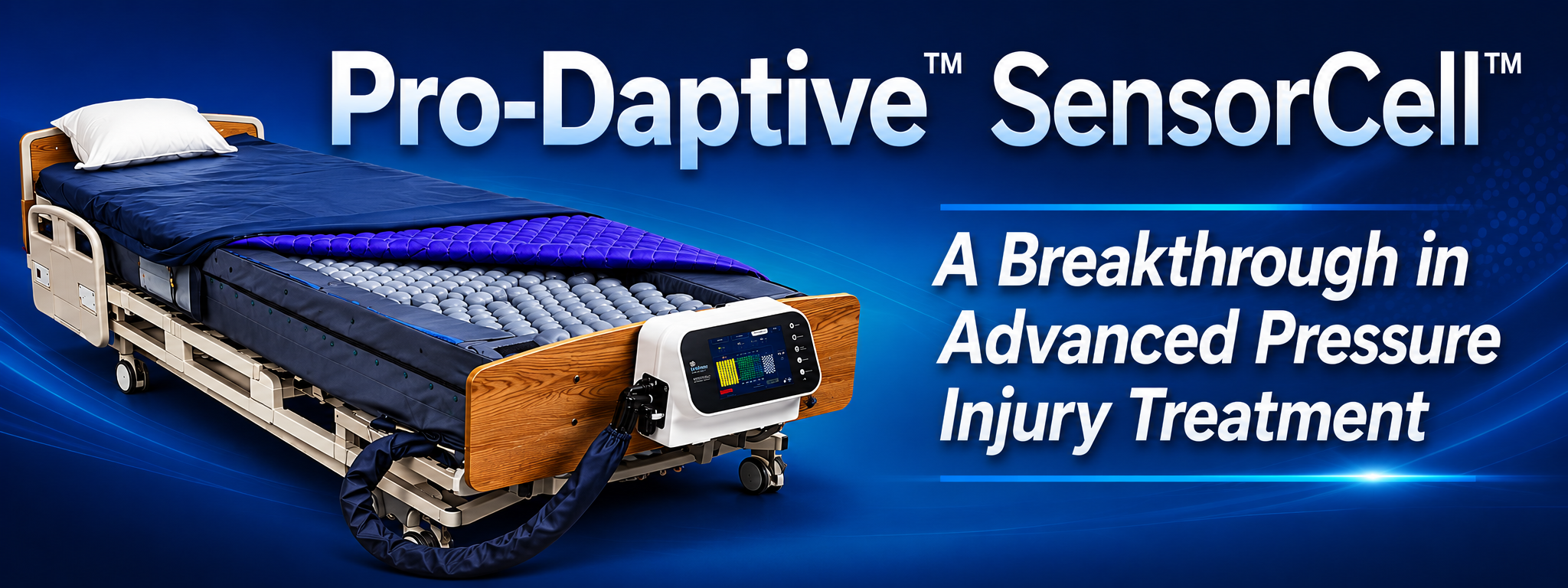
When we developed Pro-Daptive™ SensorCell™ in collaboration with leading wound care specialists, we weren’t just engineering a better mattress. We were engineering a better outcome and a better economic model for the institutions that rely on advanced wound care every single day.
Here’s where the financial opportunity becomes concrete:
Shorter Length of Stay. I first saw SensorCell™ technology in its early prototype stage and immediately recognized its potential to improve outcomes for patients while creating a stronger economic model for
institutions that depend on advanced wound care every day. LeviSense Medical™ drove the
engineering and development of the technology, while Blue Chip Medical helped shape and develop the product around the real-world needs of the market and caregivers. Together, that collaboration led to the fully developed Pro-Daptive™ SensorCell™ Flotation Surface with Enhanced Isolated AirFlow™. Today, the product is commercially available and demonstrating the potential we recognized from the beginning.
Reduced Labor Costs. Pro-Daptive’s Mobility Mode creates a firm surface at 75 mmHg, reducing the physical effort required to reposition patients by more than 30%. Across a busy unit or a long-term care floor, that reduction in repositioning effort adds up to meaningful labor savings and a reduced risk of caregiver injury.
Reduced Reliance on Wedges and Pillows. The system’s exceptional envelopment and customizable surface reduce the need for positioning wedges and pillows, lowering supply costs and simplifying care protocols.
A Cost-Effective Alternative to AFT Systems. For facilities that have been renting or purchasing Group III Air Fluidized Therapy systems for their most complex patients, Pro-Daptive™ SensorCell™ presents a compelling and cost-effective alternative. It delivers comparable immersion and pressure redistribution at a lower acquisition cost, requires significantly less maintenance, and reduces the labor burden associated with managing AFT systems day to day.
AFT also carries clinical drawbacks that compound its financial disadvantages. The constant flow of warm, fluidized air in AFT systems can accelerate patient dehydration, a complication that adds monitoring burden, increases fluid replacement costs, and can complicate the clinical picture for already-fragile patients. Patient repositioning on AFT surfaces is notoriously difficult, increasing caregiver effort and injury risk with every turn. And patients frequently report discomfort on AFT surfaces due to surface instability and heat. Pro-Daptive™ SensorCell™ addresses all of these issues directly. Its adjustable Low Air Loss system actively manages the skin’s microclimate without the aggressive drying effect of AFT, keeping patients comfortable and properly hydrated while still protecting against the excess moisture that leads to maceration and breakdown.
Home Care Transition. AFT systems are largely impractical for home care use due to their size, weight, and operational complexity, leaving many patients with advanced wounds tethered to facility-based care longer than clinically necessary. Pro-Daptive™ SensorCell™ is fully available for home care settings, opening a clear pathway to transition appropriate patients out of facilities sooner. That transition represents a significant cost reduction for healthcare systems managing post-acute populations, and a meaningful improvement in quality of life for the patients themselves.
Litigation Risk Reduction. Pressure injury-related lawsuits remain one of the most common sources of malpractice claims in long-term care. Demonstrating that a facility is using the most advanced, clinically validated pressure management technology available is not just good medicine. It’s sound risk management.
Customization That Closes the Gap Between Standard and Optimal
One of the most underappreciated cost drivers in pressure injury care is the gap between standard treatment and what each individual patient actually needs. Traditional mattress systems, whether alternating pressure or air fluidized, apply broadly similar therapy to every patient, often calibrated only by weight. But as any experienced wound care clinician will tell you, two patients of identical weight can have dramatically different interface pressure profiles, skin tolerance, and wound characteristics.
Pro-Daptive™ SensorCell™ closes that gap. With hundreds of independently adjusting SensorCells™, with more than 20 in the area of a single traditional air bladder, the system adapts at a localized level to each patient’s unique anatomy and clinical condition. Caregivers can target pressure precisely, create custom cavities for complete offloading of specific wounds, and monitor pressure status in real time through the touchscreen interface.
This level of precision doesn’t just improve outcomes. It prevents the downstream costs that result from treatment that is close but not quite right: the wound that stalls, the patient who develops a new injury while a prior one is healing, the extended stay that could have been avoided.
The Bottom Line
At Blue Chip Medical, we built Pro-Daptive™ SensorCell™ because we believed that the most advanced pressure injury patients deserved a surface as dynamic and individual as they are. But we also built it because we know that healthcare institutions cannot sustain the financial burden of a problem that precision technology can meaningfully reduce.
Better outcomes and lower costs are not competing goals. With Pro-Daptive™ SensorCell™, they are the same goal, and they are finally achievable together.
QUESTIONS?
SPEAK WITH A PRESSURE INJURY SUPPORT SURFACE EXPERT
To learn whether Pro-Daptive™ is the right fit for your care environment, contact Blue Chip Medical at
1 (800) 795-6115.
For more information please visit: Pro-Daptive™ SensorCell™

Ron Resnick is the founder of Blue Chip Medical and has spent decades developing innovative solutions for advanced wound care and pressure injury management. To learn more about Pro-Daptive™ SensorCell™ or to speak with a clinical specialist, visit the Pro-Daptive product page.
New Products


Continuing Education Program

For Clinical or Technical Assistance
CALL 800 795-6115
For technical assistance or help choosing the correct product for your specific application.

Recent Blog
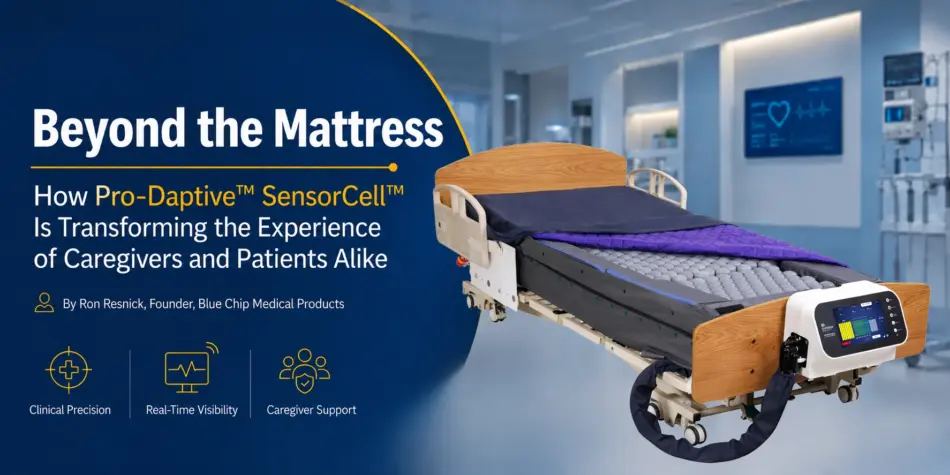
Beyond the Mattress: How Pro-Daptive™ SensorCell™ Is Transforming the Experience of Caregivers and Patients Alike
The ProDaptive SensorCell mattress provides ultimate pain relief for seniors, while making repositioning safer and easier for family caregivers.
The Hidden Cost of Pressure Injuries, and How ProDaptive™ SensorCell™ Is Changing the Financial Equation
The Prodaptive SensorCell mattress helps seniors stay independent and pain-free at home, while avoiding costly hospital stays.

Supporting K9 Heroes With Custom Transport Pads Built for Safety and Fit
Blue Chip Medical donates custom, medical-grade transport pads to keep service dogs comfortable, safe, and supported on duty.