



 MENU
MENU
Envelopment
Envelopment is the ability of a therapeutic support surface to conform closely around the contours of the patient’s body. While immersion refers to how deeply the body sinks into the surface, envelopment refers to how well the surface molds around the body to evenly distribute pressure across irregular anatomical areas.
Effective envelopment is especially important for patients with Stage III, Stage IV, and unstageable pressure injuries because it helps reduce concentrated pressure on bony prominences and high-risk areas such as the sacrum, hips, shoulders, elbows, and heels. By contouring around the body, an enveloping surface helps minimize pressure peaks, reduce shear forces, improve stability, and support tissue perfusion.
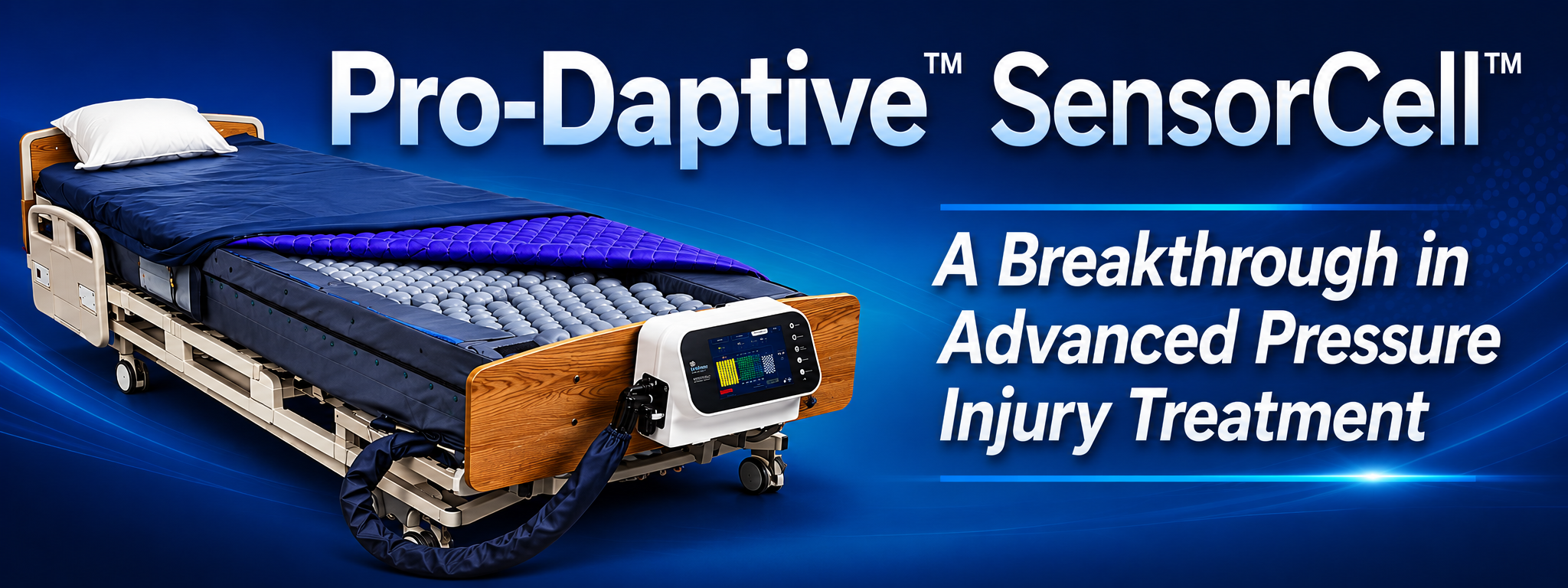
Pro-Daptive™ SensorCell™ achieves advanced envelopment through its adaptive floatation design and independently responsive SensorCell™ technology. The surface dynamically conforms to the patient’s body shape and pressure profile, allowing the patient to be supported across a larger contact area rather than concentrating pressure on isolated points. As the patient moves or repositions, the system continuously adapts in real time to maintain therapeutic support and pressure redistribution.
Like Air Fluidized Therapy (AFT), Pro-Daptive™ provides immersion and envelopment characteristics designed to reduce interface pressure and create a therapeutic healing environment for advanced wounds. However, traditional AFT systems primarily provide generalized immersion and envelopment through fluidized media, without the ability to deliver targeted, customizable pressure management.
Pro-Daptive™ goes beyond conventional AFT by combining immersion and envelopment with adaptive pressure redistribution and individualized support control. This allows the system not only to contour around the patient, but also to dynamically respond to changing clinical needs, body positioning, and vulnerable anatomical areas. The result is a more responsive therapeutic surface that helps optimize pressure management, patient stability, comfort, and wound healing support.
New Products


Continuing Education Program

For Clinical or Technical Assistance
CALL 800 795-6115
For technical assistance or help choosing the correct product for your specific application.

Recent Blog
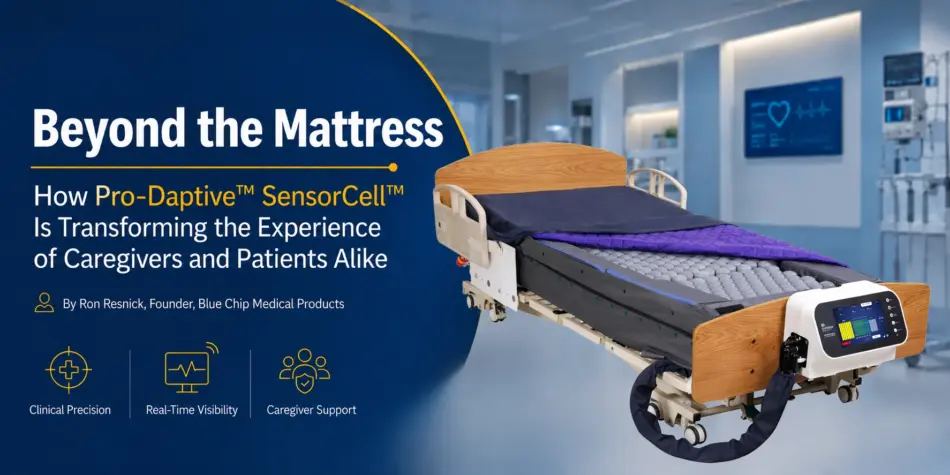
Beyond the Mattress: How Pro-Daptive™ SensorCell™ Is Transforming the Experience of Caregivers and Patients Alike
The ProDaptive SensorCell mattress provides ultimate pain relief for seniors, while making repositioning safer and easier for family caregivers.
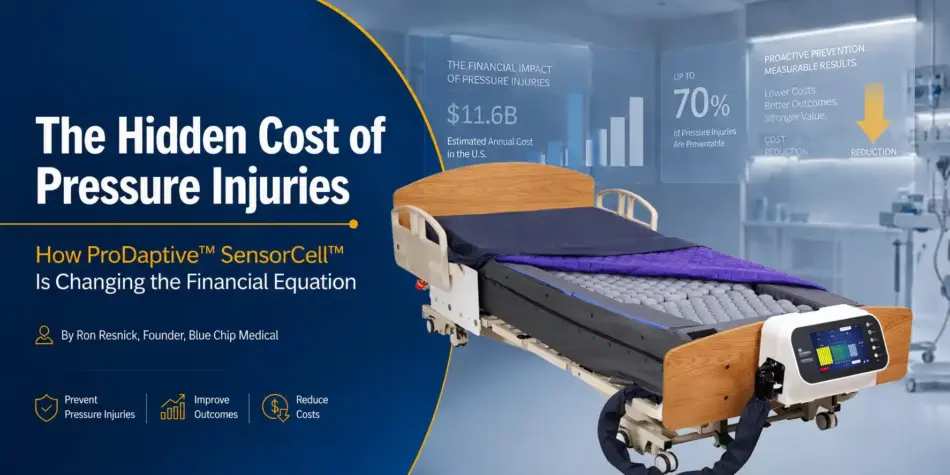
The Hidden Cost of Pressure Injuries, and How ProDaptive™ SensorCell™ Is Changing the Financial Equation
The Prodaptive SensorCell mattress helps seniors stay independent and pain-free at home, while avoiding costly hospital stays.

Supporting K9 Heroes With Custom Transport Pads Built for Safety and Fit
Blue Chip Medical donates custom, medical-grade transport pads to keep service dogs comfortable, safe, and supported on duty.