



 MENU
MENU
Unlocking Superior Pressure Injury Prevention: A Technical Deep Dive into Blue Chip Medical’s Advanced Foam Technologies
By Jeff Adise
Jump to Section
- Clinician Summary
- Why Foam Matters
- Why Foam Layers Matter
- When Foam Is Appropriate
- Prevent II Series Overview
- Blue Chip Foam Innovations
- Comparative Performance Table
- Clinical Impact and Customization
Clinician Summary
- Pressure injuries remain a high-cost, high-risk clinical challenge requiring proactive prevention strategies.
- Effective foam support surfaces must deliver immersion, envelopment, and consistent pressure redistribution.
- Layered foam construction provides superior performance compared to single-block foam designs.
- Foam mattresses are appropriate for low to moderate risk patients and early-stage pressure injuries.
- Advanced technologies such as SCT™, PPF™, and zoned foam designs improve durability and clinical outcomes.
- Blue Chip’s Prevent II series is engineered for adaptive response, improved mobility, and reduced microclimate risk.
As a pressure injury prevention specialist with nearly three decades in therapeutic support surfaces, I’ve seen firsthand how the right mattress can transform patient outcomes. Blue Chip Medical Products engineers foam mattress systems with clinically proven materials designed to prioritize pressure redistribution, durability, and patient comfort.
Why Foam Matters: The Science of Pressure Redistribution
Effective therapeutic foam must achieve three key mechanical objectives:
- Immersion, allows the patient to sink into the surface and increase contact area
- Envelopment, conforms around bony prominences to reduce peak pressure
- Pressure redistribution, spreads load to maintain interface pressures below 32 mmHg
There are multiple foam types used in medical mattresses, including high resiliency foam, visco-elastic memory foam, open cell foam, and gel-infused foams. Each varies in performance characteristics.
- ILD, defines surface firmness and response under load
- Density, determines durability and long-term performance
ILD reflects how the mattress feels today. Density reflects how it performs over time.
Why Foam Layers Matter: The Science of Comfort and Support
Unlike basic single-block foam mattresses, therapeutic systems are engineered as layered mechanical structures.
Layer Roles
- Comfort Layer
- Conforms to body geometry
- Reduces peak pressure
- Transition Layer
- Improves load distribution
- Enhances resiliency
- Support Core
- Maintains alignment
- Prevents bottoming out
Advanced designs incorporate Surface Cut Topography (SCT™), using geometric patterns to enhance pressure redistribution and reduce shear forces.
When Foam Is Appropriate
For Prevention
Foam mattresses are appropriate for patients at low to moderate risk of pressure injury development.
For Treatment
Foam may be used for:
- Stage I pressure injuries
- Early Stage II pressure injuries
Clinical Considerations
- Patient mobility
- Skin condition
- Moisture and microclimate
- Comorbidities
- Caregiver support
Prevent II Series: Adaptive Foam Performance
The Prevent II series is engineered around Prevention by Suspension™, maintaining consistent low-pressure support through dynamic response to patient movement and weight distribution.
- Reduces heat and moisture buildup
- Supports easier repositioning
- Maintains consistent pressure redistribution
Blue Chip Foam Innovations: Technical Breakdown
Med-Flex™ PPF™
Pressurized polymer foaming produces uniform cell structure, reducing sag and improving durability.
Reflect™ SCT™
Engineered cut patterns create zoned pressure redistribution without multi-layer bonding.
Sphere™ and Multi-Flex™
Self-adjusting foam zones enhance circulation and airflow.
Heel Wrap™
Provides targeted heel offloading while maintaining structural integrity.
Comparative Performance: Foam Technologies
| Foam Technology | Key Mechanism | Pressure Redistribution | Durability | Application |
|---|---|---|---|---|
| Med-Flex™ PPF™ | Pressurized cell structure | Uniform load distribution | High | Base layers, bariatric |
| Reflect™ SCT™ | Surface cut zoning | Targeted pressure relief | High | Advanced foam systems |
| Sphere™ / Multi-Flex™ | Dynamic compression zones | Adaptive redistribution | High resiliency | Top layers |
| Heel Wrap™ | Heel-specific offloading | Localized pressure relief | Moderate | Heel protection |
Clinical Impact and Customization
Facilities utilizing advanced foam systems report reduced incidence of advanced-stage pressure injuries and improved patient comfort.
- Supports multiple patient populations including bariatric and geriatric
- Custom configurations available
- Designed for acute care, long-term care, and home settings
Investing in high-quality foam support surfaces reduces long-term costs associated with advanced pressure injuries and extended care.
Conclusion
Pressure injury prevention requires clinically effective support surfaces. Advanced foam technologies provide a cost-effective and scalable solution for appropriate patient populations. Blue Chip Medical delivers engineered systems designed for real-world clinical performance.

Authored by: Jeff Adise
Jeff has dedicated over 30 years to advancing wound care solutions. He is a product specialist and developer of therapeutic support surfaces for the prevention and treatment of Stage I–IV pressure injuries in hospital beds, home recliners, lift chairs, wheelchairs, and more.
New Products



Continuing Education Program

For Clinical or Technical Assistance
CALL 800 795-6115
For technical assistance or help choosing the correct product for your specific application.

Recent Blog
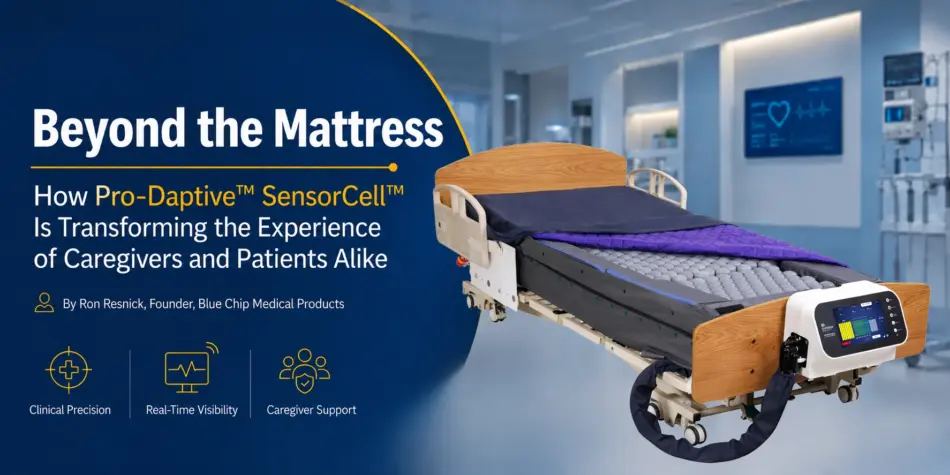
Beyond the Mattress: How Pro-Daptive™ SensorCell™ Is Transforming the Experience of Caregivers and Patients Alike
The ProDaptive SensorCell mattress provides ultimate pain relief for seniors, while making repositioning safer and easier for family caregivers.
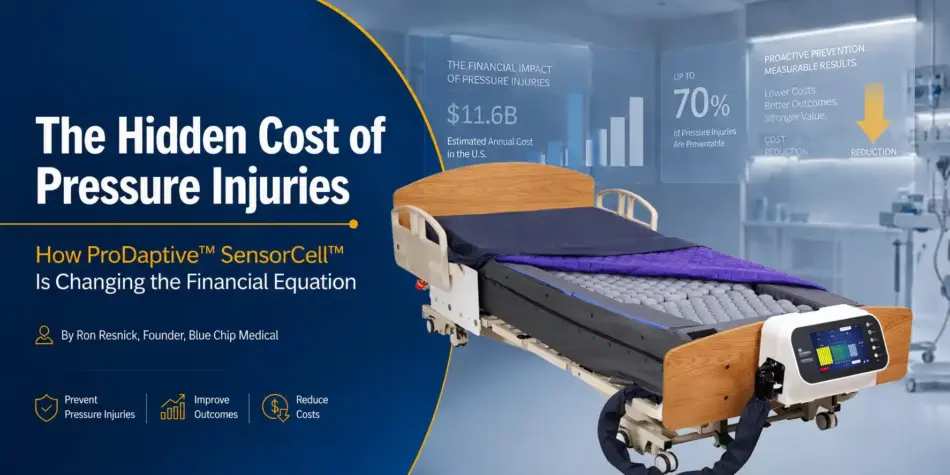
The Hidden Cost of Pressure Injuries, and How ProDaptive™ SensorCell™ Is Changing the Financial Equation
The Prodaptive SensorCell mattress helps seniors stay independent and pain-free at home, while avoiding costly hospital stays.

Supporting K9 Heroes With Custom Transport Pads Built for Safety and Fit
Blue Chip Medical donates custom, medical-grade transport pads to keep service dogs comfortable, safe, and supported on duty.