



 MENU
MENU
What Is Alternating Pressure Therapy?

A Technical Deep Dive for Clinicians, Hospitals, and Wound Care Professionals
By Jeff Adise
Clinician Summary
Alternating Pressure Therapy (APT) is an active support surface modality designed to reduce sustained interface pressure, improve microcirculatory perfusion, and mitigate tissue deformation in patients at risk for or experiencing pressure injuries. Unlike static foam surfaces, alternating pressure systems cyclically redistribute load through timed air cell inflation and deflation patterns. When properly indicated and configured, these systems support compliance with evidence-based pressure injury prevention protocols, particularly for high-risk populations including immobile, bariatric, diabetic, neurologically impaired, and critically ill patients.
This article clarifies:
- The biomechanical principles underlying alternating pressure therapy
- How APT differs from static pressure redistribution
- Indications and contraindications in acute, long-term, and home care settings
- Common misconceptions in non-clinical sources
- How alternating pressure aligns with standards of care
- Design features that influence therapeutic performance
Article Navigation
- The Pathophysiology of Pressure Injury
- Static Pressure Redistribution vs. Alternating Pressure
- The Biomechanics of Alternating Pressure Therapy
- Capillary Closing Pressure and Tissue Perfusion
- Alternating Pressure Indications Across Clinical Settings
- Diabetic and High-Risk Populations
- Common Misconceptions in Online Content
- Features & Settings That Affect Clinical Outcomes
- Alignment With Evidence-Based Standards
- Implementation Considerations for Facilities
1. The Pathophysiology of Pressure Injury
Pressure injuries are often not caused by pressure alone. Sustained interface pressures that exceed capillary closing pressure and tissue tolerance lead to:
- Capillary occlusion (a mechanical event that blocks or severely reduces blood flow)
- Ischemia (the physiologic consequence of reduced or absent blood flow)
- Impaired oxygen and nutrient delivery (tissue hypoxia)
- Lymphatic obstruction
- Cellular deformation
Co-occurring factors include heat, moisture, shearing, friction and patient position. The addition of each co-occurring factor exacerbates the effects of sustained mechanical loading thereby increasing the risk of developing a wound. This distinction is clinically significant when selecting support surfaces.
The National Pressure Injury Advisory Panel (NPIAP) defines pressure injuries as localized damage to the skin and/or underlying soft tissue usually over a bony prominence or related to a medical device (NPIAP, Prevention and Treatment of Pressure Ulcers/Injuries Clinical Practice Guideline).
2. Static Pressure Redistribution vs. Alternating Pressure
Static pressure redistribution surfaces e.g., foam or gel) function by increasing contact area to reduce peak interface pressures, immersion and envelopment. They are appropriate for:
- Low-to-moderate risk patients
- Patients capable of repositioning
- Situations with consistent manual turning schedules
Alternating Pressure Therapy, by contrast, is dynamic. It functions via cycles of inflation and deflation of air cells, redistributing pressure and promoting tissue reperfusion. Alternating Pressure Therapy is appropriate for:
- Patients with a moderate-to-high risk for developing a pressure injury
- Patients presenting with pressure injuries
- Limited mobility or the inability to reposition
This active modulation of air pressure within the support surface reduces the duration of sustained load at any single tissue site. Importantly, alternating pressure is a controlled mechanical sequence designed to interrupt ischemic time thresholds.
3. The Biomechanics of Alternating Pressure Therapy
Alternating pressure systems operate on programmable cycles—often ranging from 10 to 20 minutes—where adjacent air cells inflate while neighboring cells deflate.
This produces:
- Load transfer between tissue zones
- Reduced peak pressures over bony prominences
- Recurrent microcirculatory restoration
- Reactive hyperemia
From a biomechanical standpoint, this approach addresses two critical factors:
- Magnitude (mmHg) of pressure
- Duration of pressure
Tissue viability via pressure redistribution is a time-pressure relationship. Lower pressure for extended duration can be as harmful as high pressure for shorter intervals. Alternating pressure systems specifically target the time variable.
Advanced systems may incorporate:
- Fowler compensation to address coccyx and sacral loading when head-of-bed elevation increases shear
- Patient weight sensing to maintain optimal therapy, immersion and envelopment
- Pulsation modes for enhanced immersion therapy
- Enhanced or true low air loss for microclimate control
- Sealed vs ventilated low air loss air bladders
- Static mode with automatic fall back
- Specialized heel section to float heels
- Cavity creation
4. Capillary Closing Pressure and Tissue Perfusion
Capillary closing pressure (CCP) has historically been cited as approximately 32 mmHg. While modern research suggests tissue tolerance varies based on individual comorbidities, the principle remains: sustained pressure above perfusion thresholds compromises blood flow.
Alternating pressure systems are engineered to cyclically reduce interface pressures below perfusion-limiting levels, allowing reactive hyperemia.
The Agency for Healthcare Research and Quality (AHRQ) emphasizes pressure redistribution and repositioning as core prevention strategies (AHRQ, Preventing Pressure Ulcers in Hospitals Toolkit).
APT should not replace repositioning protocols, but it serves as a mechanical adjunct in patients who:
- Cannot be turned frequently
- Have limited tissue tolerance
- Exhibit existing Stage I–IV injuries
5. Alternating Pressure Indications Across Clinical Settings
Acute Care Hospitals
- Patients with advanced pressure injuries or diabetic wounds
- High-risk and limited mobility patients
- Patients with conditions that require a Fowler position
Long-Term and Skilled Nursing Facilities
- Residents with chronic immobility
- Patients with advanced pressure injuries
- High-risk and limited mobility patients
- Patients with conditions that require a Fowler position
- Neurologic disorders
- Cognitive impairment limiting repositioning compliance
Senior Living and Home Care
- Bedbound patients or those with the inability to reposition
- Patients with advanced pressure injuries
- High-risk patients without wounds
- Patients with conditions that require a Fowler position
- Post-surgical recovery with limited mobility
Appropriate system selection should consider:
- Patient weight and required bed width
- Location and stage of existing wounds
- Pressure injury risk potential
- Body shape and size
- Infection control requirements
- Patient transfer and care needs
- Access to caregivers
6. Diabetic and High-Risk Populations
Patients with diabetes represent a uniquely vulnerable group. Peripheral neuropathy reduces protective sensation, and microvascular disease impairs perfusion.
In my published article, Pressure Wounds in Diabetic Patients: Aligning Support Surfaces With Standards of Care (ClinicalGate), I wrote:
“Support surfaces are a critical—but frequently misunderstood—component of pressure wound prevention and treatment in this population.”
This is especially relevant in diabetic care. Neuropathy allows prolonged unrelieved pressure, while impaired inflammatory response slows healing. Alternating pressure systems introduce a structured offloading cycle that compensates for diminished physiologic resilience.
Source: ClinicalGate, Pressure Wounds in Diabetic Patients: Aligning Support Surfaces With Standards of Care, Jeff Adise.
For facilities managing diabetic populations, dynamic alternating pressure systems often become a clinical necessity rather than an upgrade.
7. Common Misconceptions in Online Content
A review of consumer-facing web content reveals recurring inaccuracies:
Myth 1: Alternating pressure eliminates the need for repositioning.
False. Clinical guidelines consistently reinforce manual repositioning as foundational.
Myth 2: All alternating pressure systems perform the same.
Incorrect. Engineering variables significantly impact clinical effectiveness.
Myth 3: Alternating pressure is only for Stage IV injuries.
In reality, it is frequently indicated for prevention in high-risk populations.
Myth 4: Higher air pressure equals better therapy.
Therapeutic efficacy depends on pressure redistribution, immersion, envelopment, controlled cycling and patient comfort—not simply inflation volume.
Clinicians must evaluate systems based on design characteristics and clinical evidence rather than marketing claims.
8. Features & Settings That Affect Clinical Outcomes
Not all alternating pressure mattress systems are equivalent. Key settings and features should be considered:
1. Cycle Time
- Shorter cycles increase offloading frequency but may affect patient comfort
- Longer cycles may improve patient comfort but reduce reactive hyperemia
2. Low Air Loss – Microclimate Management / Maceration Risk
- Low Air Loss provides some degree of microclimate management
- Enhanced or True Low Air Loss reduces maceration risk and improves microclimate management
3. Fowler Compensation
Head-of-bed elevation increases coccyx and sacral interface pressure and shear. Systems with Fowler functions adjust internal air pressures in the coccyx and sacral bladders during Fowler positioning.
- Automatic Fowler Functions – Helps prevent bottoming-out, sinking, sliding and shearing by detecting head-of-bed elevation and automatically adjusting the mattress
- Manual Fowler Functions – Must be engaged by the caregiver, limiting effective use
4. Weight Calibration
Internal air bladder pressure assures patient comfort, proper support and optimal therapy. Accuracy and consistency of these pressures is controlled by the air pump and the quality of its components.
- Under-inflation increases bottoming-out risk; over-inflation reduces immersion
- Proper inflation is determined by predetermined settings balancing therapeutic effectiveness, support and patient comfort
- Facilities should evaluate systems using both clinical feedback and pressure mapping when available
9. Alignment With Evidence-Based Standards
Alternating pressure therapy aligns with recommendations from:
- National Pressure Injury Advisory Panel (NPIAP)
- European Pressure Ulcer Advisory Panel (EPUAP)
- AHRQ pressure injury prevention toolkit
- Centers for Medicare & Medicaid Services (CMS) quality reporting frameworks
These organizations emphasize:
- Risk stratification
- Support surface selection based on risk level
- Ongoing reassessment
Dynamic surfaces are often recommended for patients at high or very high risk. APT is not experimental. It is a clinically established modality when used within a comprehensive prevention protocol.
10. Implementation Considerations for Facilities
For hospitals and senior living facilities, successful implementation requires:
- Staff education on system operation
- Clear criteria for patient eligibility
- Routine inspection
- Integration into wound care documentation workflows
- Infection control compliance
- Safety and entrapment compliance
Procurement decisions should consider:
- Lead times
- Domestic manufacturing and quality control
- Serviceability and replacement components
- Clinical support availability
Conclusion
Alternating Pressure Therapy is a biomechanical intervention designed to disrupt sustained ischemic loading, support microvascular perfusion, and reduce deep tissue deformation in vulnerable populations.
When properly selected and integrated into comprehensive wound care protocols, alternating pressure systems serve as a critical component of pressure injury prevention and management across acute, long-term, and home care settings.
As clinicians confront increasingly complex patient populations—including aging demographics, bariatric patients, and individuals with diabetes—the role of dynamic support surfaces continues to expand.
Understanding the science behind alternating pressure therapy allows facilities to move beyond marketing language and align product selection with evidence-based standards of care.

Authored by: Jeff Adise
Jeff has dedicated over 30 years to advancing wound care solutions. He is a product specialist and developer of therapeutic support surfaces for the prevention and treatment of Stage I–IV pressure injuries in hospital beds, home recliners, lift chairs, wheelchairs, and more.
New Products





Continuing Education Program

For Clinical or Technical Assistance
CALL 800 795-6115
For technical assistance or help choosing the correct product for your specific application.

Recent Blog
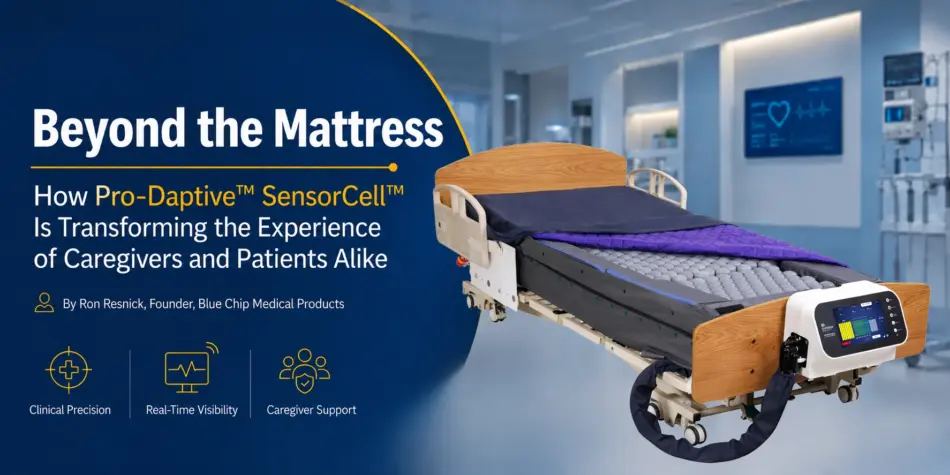
Beyond the Mattress: How Pro-Daptive™ SensorCell™ Is Transforming the Experience of Caregivers and Patients Alike
The ProDaptive SensorCell mattress provides ultimate pain relief for seniors, while making repositioning safer and easier for family caregivers.
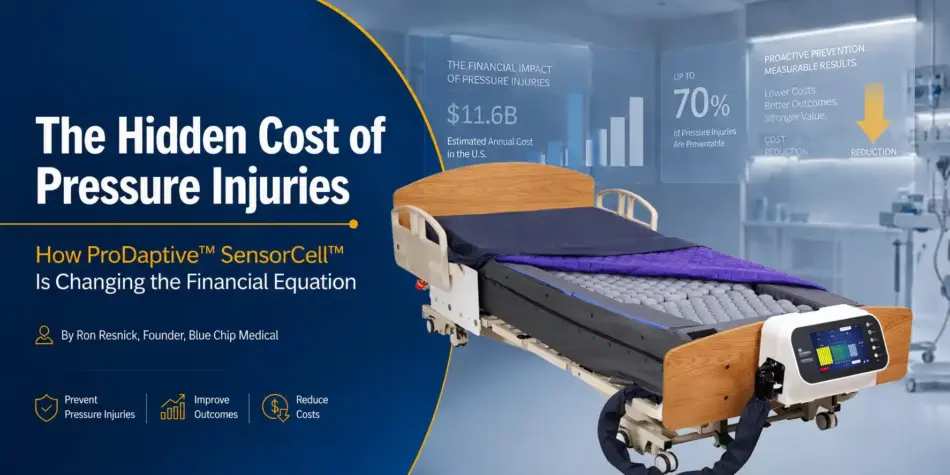
The Hidden Cost of Pressure Injuries, and How ProDaptive™ SensorCell™ Is Changing the Financial Equation
The Prodaptive SensorCell mattress helps seniors stay independent and pain-free at home, while avoiding costly hospital stays.

Supporting K9 Heroes With Custom Transport Pads Built for Safety and Fit
Blue Chip Medical donates custom, medical-grade transport pads to keep service dogs comfortable, safe, and supported on duty.